Category: Personal Growth

  • Embrace Failure To Achieve Victory

    Embrace Failure To Achieve Victory

    As I watched my son take his first unsteady steps, I couldn’t help but be aware of the potential pitfalls and dangers around him.

    It was in these moments, observing my son growing up, that I began to truly understand why failing is the most normal thing in the world and starting to ask myself the question why we as grown-ups have such a hard time when it happens to us.

    About trial and error while growing up

    Childhood is a continuous journey of trial and error. Every new skill, every milestone, we achieve through a series of attempts and failures. Even though my son figured out to e.g. open the door, he continued to experiment and explore different ways to achieve what he had in mind.  While researching on this topic, I learned is totally a normal thing for kids. They take the risk of failure just to explore whether there is an alternative to get things done.
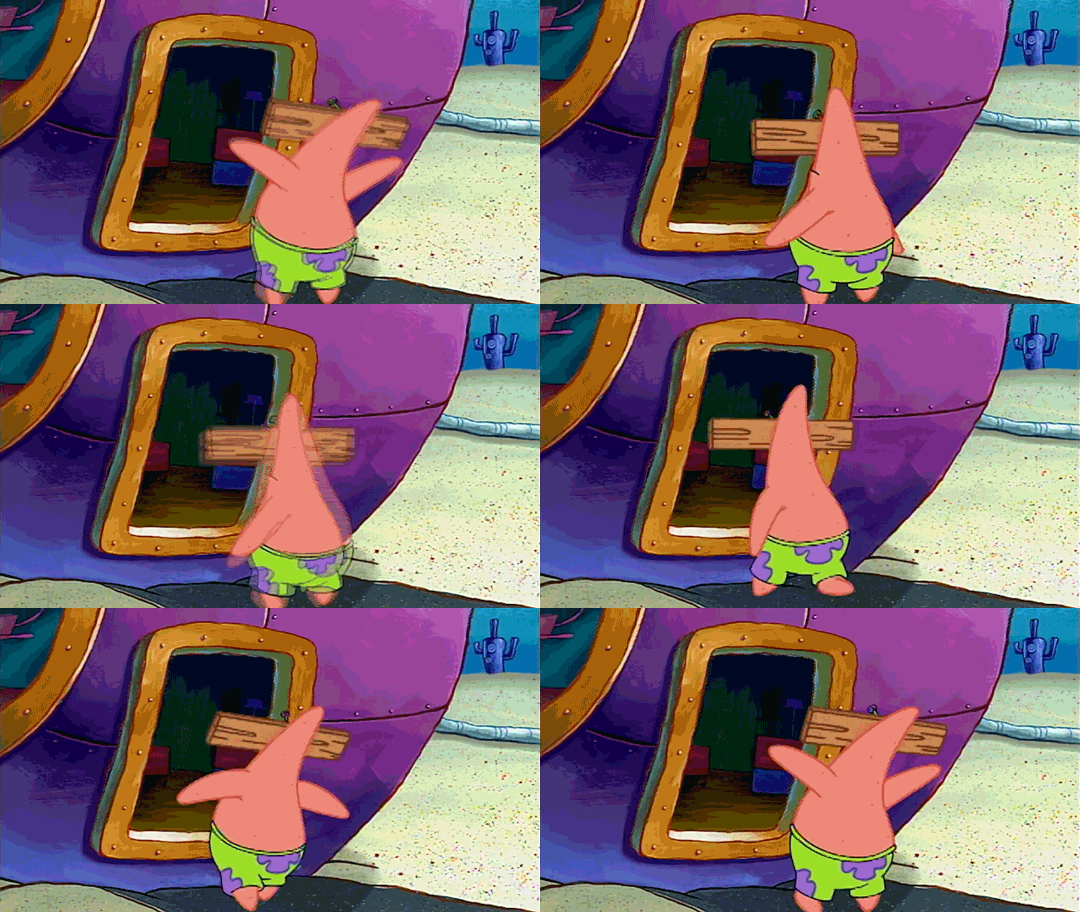
    Continuous retry and failure of Patrick Star

    When we grow older our capability of handling failures changes the same way as experience success. There is a correlation when I think about it. 

    Latest in Kindergarden, kids start comparing themselves with others and potentially get the feeling that winning or being successful increases their acceptance amongst their peers and hence increases their social worth. This follows through in several aspects of today’s society. Being the smartest and getting the confirmation with excellent grades. Being the best by getting the confirmation of winning a tournament. Even team sports like soccer have their individual champions. Or what about social proof on social media by comparing who has the most followers? 

    Failure is a universal experience

    But everyone fails at some point, in some way. It’s the common thread that binds us all, from the toddler learning to walk to the CEO launching a new venture. Some of us are in a state of constant failure due to how they set goals. Yet, despite its universality, we often stigmatise failure.

    When I failed in my early days I remember that I was told to know better, since I was old enough to do better. In the majority of cases there is no „well done for trying“. We fear failure and avoid it because we feel ashamed when it happens.

    Avoiding to do something new because of fear of failure is a missed learning opportunity.

    Sometimes, our fear of failing is so intense that it stops us exploring new opportunities. The purpose of the emotion fear is to make us alert. But this emotion can actually hold us back in our comfort zone when we have the chance to grow and broaden our horizons.

    Stop the fear roller coaster and start fresh

    I reflected on all my main failures in the past and there were many from what I can tell. And since I tend to be hard on myself, I also asked a friend to share his point-of-view on my failures.

    Once I acknowledged, that my failures are not a reflection of my worth, but were an opportunity to improve, things got a lot easier. And with things I mean my approach to try our new stuff and experiment with my existing behaviour and habits. But getting to accept failures being part of the game is the hard part. How to get to this state is very individual. I will share with you what worked for me, as someone who was thought that failure are bad and to be avoided. 

    It all started with reflecting on my son’s behaviour of incautious learning. Be it learning riding a bike, swimming or building lego robots at some point, he got so frustrated that what he did was not according to what he had in mind, that got very angry and eg. Threw his half way built robot across the room. The robot was broken, he started crying because he was angry about the it and about himself on what he just did.

    It was a personal failure for him. He had a clear expectation in his mind, how the robot would look like and it didn’t match reality. Once we talked about that it is not OK to throw things around and all the emotions that overwhelmed him, he again started calmly to build the robot again – with a better version, as he stated. 

    From that I derived three actions to myself when it comes to personal failing: 

    1. Every time I fail emotions like frustration or anger are necessary vents to steam off. I let it happen. If possible, I try to direct these emotions into some kind of constructive activity. I figured that journaling it out of my head or any kind of immediate physical activity releases the initial spike of stress. 
    2. I reflect on why it is a failure and why I see it as such. Is it because of my own expectation towards the outcome or are there expectations by someone else. Especially if it me setting the bar high I ask someone who I trust for help to reflect. Depending on the topic this is my wife, friend or even good old internet.
    3. I accept failure by asking myself, if I tried with all I have. Sometime this is not case, then I need to understand why in order to improve the next time. But if I honestly answer this with a yes, I come to peace with the myself and my failure. 

    Don’t just “try again” or “try harder”

    If you are missing the standard phrases of „stand up, dust yourself off and try again“, it is because I believe they are too generic to be shared with anyone as actionable advice. Even for things you really want, it is too naive to blindly follow this advice. Some times it is better to quit, than wasting energy on a something with low probability of achievement and the early you know, the faster you can focus on something else. 

    For me, the main factor in deciding whether to try again is if it boosts my energy level. Consider my love for making music and playing the guitar. It feels so exciting and powerful to be the one creating the sound, melody, and rhythm.

    However, learning to play “Nothing Else Matters” has been a frustrating journey. I often fall short of my own expectations during practice because it just doesn’t sound like the original. Still my energy level increases with every try. That is why I see it as an important reflection point before trying again.

    If I give it my all, maybe even multiple times, and it leaves me feeling drained, I’m perfectly fine with accepting that this as a failure and moving on to something else. But stepping back and don’t trying again, doesn’t mean that you lost for ever. Just this time it didnt work out.

    From this failure, I learned something valuable. I was brave enough to try, and that courage will make it easier for me to attempt new things in the future.

    Summary: on failing and why it is the path to go for winners

    • Accept that failing is part of the game in everything you and also others do in life. 
    • As long as trying makes you feel engaged and brings positive energy you are on track.
    • Once trying is just a sucker of your energy change the approach or try something else.

    Further readings:

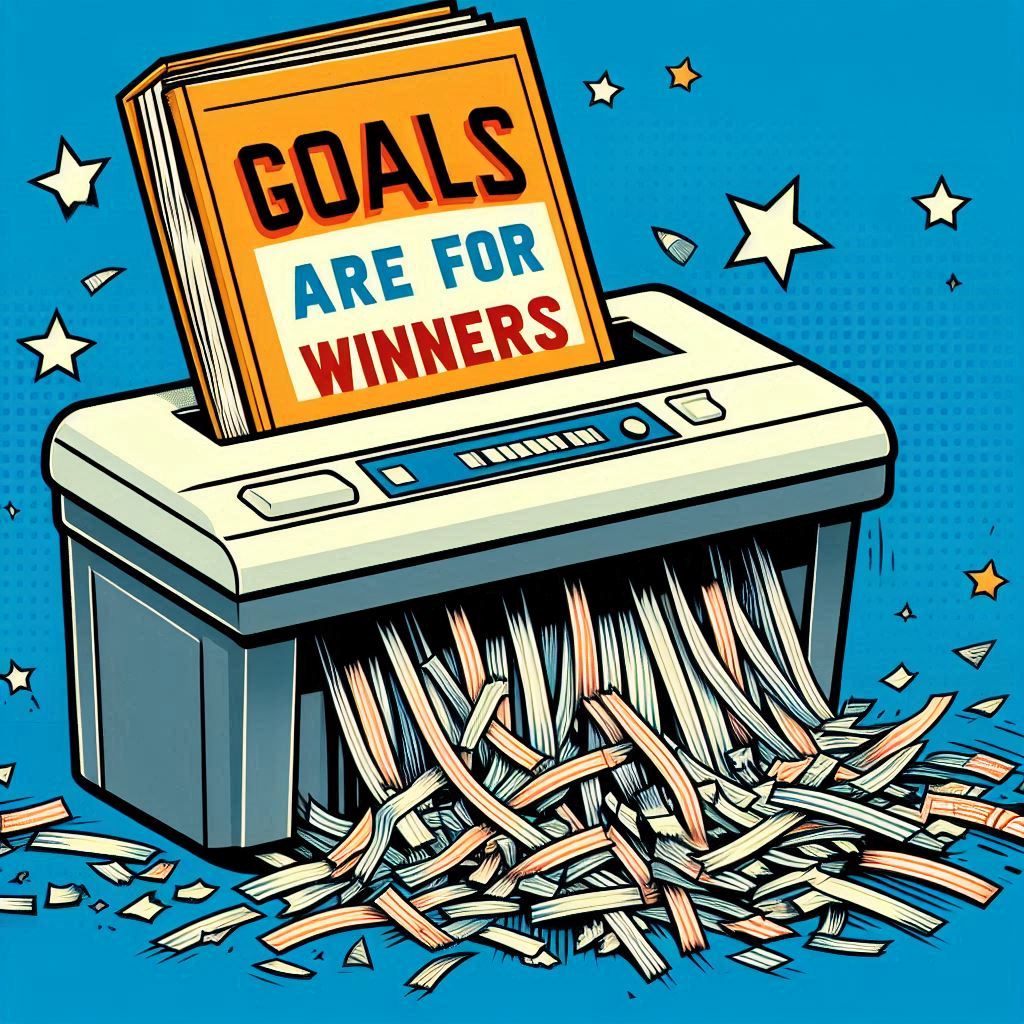
  • Goals are for losers! How to win with habits

    Goals are for losers! How to win with habits

    If you consistently failed achieving goals, this is for you. For all the professional goal chasers, hear me out and judge later.

    Goals are a fundamental part of our lives. When I ask my son what he wants to make for a living as grown-up, his answer is: I want to be an explorer digging for dinosaurs bones and lost treasures. This is one type of goal called „approach motivation“  to pursue positive outcomes or experiences. Then there is another side of the goals medal, which most likely all of us already experienced: I have to study hard this weekend so I don’t fail this time at my exam. In this example, the primary motivation is not to achieve a high grade or excel in the subject (which would be approach-motivated), but rather to avoid the negative consequence of failing the exam. This is called „avoidance motivation“, where the focus is on steering clear of an undesirable outcome. 

    Demotivating facts about goals

    At the end it does not matter which team you belong to. What matters is, that we tend to set ourselves goals in order to reach a dedicated state of approaching or avoiding something we have in mind. 

    What both motivations ultimately boil down to is the question: is the goal accomplished? And to me, there is only a binary answer to that – yes or no. Of course you could say „I am half way there“ or „almost accomplished“. But if you look a the to-do list of yours that says „[ ] – laundry“, the answer is either check marked or not. 

    So until your goal is reached, you are in a constant state of continuous failure. This might become uncomfortable over time depending on how you designed your goal. The incompleteness of the goal could manifest in an constant reminder of you not being good enough. And exactly this is the problem I have with goal orientation. 

    SMART goals ain’t silver bullets either

    A this point the more advanced users of goal setting might chime in and state that „[ ] – laundry“ is not a good goal. The golden standard for goals is to define them as SMART. A SMART definition of my previous example „[ ] – laundry“ could be „I will wash, dry, and put away all my clothes that are currently in the laundry basket by 5 PM this Sunday“. The abbreviation SMART goals stand for is the following:

    • Specific: Wash, dry, and put away all the clothes in the laundry basket.
    • Measurable: All clothes in the laundry basket will be clean and stowed away.
    • Achievable: If the washing machine and dryer are working it is a realistic task given.
    • Relevant: Keeping clothes clean and organised is important for personal hygiene and maintaining a tidy living space.
    • Time-bound: Complete by 5 PM this Sunday.

    But even the SMARTest goal won’t make you „immune“ to the following: Once you achieve your goal it is time to celebrate. You feel terrific and enjoy the well earned fruits of accomplishing something – until, inevitably, the novelty wears off. You might start to realise you just lost the one thing that gave you direction. And your gut feeling is telling you that you need to fill this void with another goal. Perhaps a bigger one this time. So you settle for new goals and start a new cycle. This is until you reach a state of your own highest incompetence and get aware of that by missing one goal after the other you set to accomplish. 

    And don’t get me started with midlife crisis – if you are not in that position (yet) let me share what it felt for me. I was biased that a fulfilled life is when you have a family, an own house, a career with no financial worries what so ever. This is what I accomplished and I am grateful for everything that brought me here. But the emptiness of not knowing what to settle next was more of a topic for the past few years as I would like to admit and it drew a lot of my energy and attitude. It made me bitter and jealous of friends who had something to pursue.

    Systems as alternatives to goals

    The underlying principle of setting goals is to have guiding principles to align our behaviour and actions on a day-to-day basis in order to reach a desired state. Goal setting is not the only way to influence our behaviour in a positive streamlined manner. 

    „You don’t have the be the most intelligent, but have a plan“ used to be a saying of my grandpa. It took me some time to figure out what exactly he meant with it. 

    In short my plan instead of entering the hamster wheel of goal setting is the following: 

    1. Have a rough idea about the desired state in a broad context, 
    2. Ask yourself daily what to do next, to get closer to this state
    3. Plan for it making sure the activation energy is as low as possible 
    4. Just do what you planned – no excuses! celebrate every iteration.
    5. Reflect if the desired state is still what you want. Proceed with step 2.

    Let us take an example of a common new years eave goal: Loose some weight. With a goal oriented approach you would most likely try some diet plans and / or subscribe and go to the gym. 

    1. Have a rough idea: In a system based approach you start with a rough idea about the desired state. My rough idea in the context is: be a healthy person. How is the weights of someone who is considered as healthy? It depends! It depends on your age, your medical condition, your environment, latest studies about BMI etc. But health is only one factor. Strength, stamina – there are many factors you could come up with that characterise a healthy person. This may even include your sleep and you might want to consider to stop doom scrolling your social media apps.

    2. Reflect what can I do to become a healthy person? You will end up with a long list of ideas. But what is of importance here is what can you do almost immediately. 

    • Walk instead of driving
    • Skip the sweets
    • Subscribe to gym online

    In step 3. just do it according to you plan you take it to the next level, so your next best action does not take dust. It is a trick to overcome your weaker self and prepare the task well so you eliminate all room for potential excuses to get started:  

    • If you want to walk instead of driving then block your time in your calendar for the next day.
    • Skip the sweets and add healthy snacks to your shopping list
    • Subscribe to gym online and prep your sports bag and put it in your car already. Or wear your sports shirt under your clothes the next day.

    I like to compare this approach with navigation on sight. Think of yourself as a captain that has to navigate ship in unknown seas without any deterministic tools. Because in most of the cases it is similar to any new situation we are in. We know that we want to get somewhere, our desired state, but don’t exactly how. Such a system based approach comes with the benefit, that it puts your actions into a broader context with a real intent. Allowing you to take advantage of any measure that helps to reach the desired state.

    Now if you think, that this is only applicable for personal aspirations. I have another comparison for you in the area of Projectmanagement which is the waterfall model and agile methodologies. You will figure out what is goal based and system based once you research it. 

    In short: It is about establishing a system of incremental progress – baby steps if you will – towards a rough idea of where or what you want to be. Introducing a level of flexibility towards how to achieve it. It lifts the burden of knowing that you have something unaccomplished yet.

    How to transition from traditional goal based approach to a system based approach is a post by itself – I am happy to follow-up on this if you are interested. With this I conclude my last blogpost for 2024. I would love to hear from you. Subscribe to stay with me on these topics. Looking forward for your thoughts on this. 

    Conclusion

    • Goals in all forms are an orientation of the direction we strive
    • Good goals are SMART, but most people are not smart setting their goals.
    • Once you acchieved all your goals you might feel a void, that needs to be filled.
    • If not achieved, most of us feel miserable – the same is true in the phase until achieve.