Tag: awareness

  • Introverts Guide to Excel in a Collaborative Work Culture

    Introverts Guide to Excel in a Collaborative Work Culture

    Collaborative work cultures are all the rage. Open-plan offices, constant team meetings, brainstorming sessions… it’s a world designed for connection and rapid idea generation. But what if, for you, all this constant interaction feels… draining? If you’re an introvert, you’re likely familiar with this feeling. Often, these cultures prioritize extroverted behaviors – quick thinking, vocal participation, and constant networking – leading many introverts to feel like they have to change to fit in.

    I know this feeling intimately. From a young age, I’ve naturally gravitated toward solitude. It’s not that I dislike people; it’s simply that I don’t need external stimulation to feel energized. In fact, too much of it can leave me feeling overwhelmed and depleted. It distracts me from the deep focus that allows me to do my best work.

    But here’s the crucial point: introversion isn’t a weakness. It’s a different way of processing information, gaining energy, and contributing to a team. Introverts bring unique strengths – deep thinking, active listening, thoughtful analysis, and focused execution. And you absolutely can thrive in a collaborative workplace without sacrificing your energy or authenticity. Let me share what i works for me to navigate collaboration while staying true to myself.

    Understanding Your Introverted Needs

    The core difference between introverts and extroverts isn’t shyness or sociability. It’s where you get your energy. Extroverts are energized by social interaction; being around people fills them up. Introverts, on the other hand, recharge through solitude. Social interaction expends energy, even if it’s enjoyable. Think of it like a battery: extroverts recharge during interaction, while introverts need quiet time to recharge after interaction.

    Understanding this fundamental difference is key to identifying your personal triggers in a collaborative setting. What specifically drains your energy? Here are a few common culprits from my professional live:

    • Excessive meetings: Back-to-back meetings leave little time for focused work or quiet reflection.
    • Constant interruptions: Being frequently interrupted breaks my concentration and makes it difficult to regain momentum.
    • Large group brainstorming without preparation time: Being put on the spot in a large group can be overwhelming and stifling for someone who prefers to process ideas internally first.
    • “Popcorn” style idea sharing: Rapid-fire brainstorming, where ideas are thrown out quickly without much thought, can feel chaotic and unproductive.

    Self-awareness is paramount. What level of social interaction feels comfortable for you? How much downtime do you need to recharge? What situations leave you feeling depleted? It’s okay to not always be “on” and actively participating. Authenticity is far more valuable than trying to conform to a mold that doesn’t fit.

    Setting Boundaries – Protecting Your Energy

    Protecting your energy isn’t selfish; it’s essential for sustained performance and well-being. Here’s how to establish healthy boundaries in a collaborative environment:

    • Schedule “Recharge Time”: Treat quiet focus time like an important meeting – block it off in your calendar and resist the urge to reschedule. This could be 30 minutes first thing in the morning, an hour after lunch, or whatever works best for you. I figured that reading 20 minutes after lunch is what distracts me from work related topics and highly boosts my ability to focus again.
    • Meeting Management:
      • Pre-Meeting Prep: Review the agenda beforehand to formulate your thoughts and prepare contributions. In case there is none, request it!
      • Selective Participation: You don’t need to contribute to every discussion. Choose moments where your input is truly valuable.
      • Politely Decline: It’s okay to decline meetings that aren’t essential for you. Try phrasing like: “Thank you for including me. I’m currently focused on X, and I don’t think my input is crucial for this particular meeting.”
    • Manage Interruptions:
      • Office Hours: If feasible, designate specific times for open communication via open doors in the office or “escape” into home office.
      • Visual Cues: Headphones or a “Do Not Disturb” sign can signal your need for focused work.
      • Email/Slack Boundaries: Don’t feel obligated to respond immediately to every message. Set expectations for response times. You may want to set a respective status as with NoHello.
    • Communicate Your Needs: Respectfully let colleagues know when you need some quiet time to process. A simple “I need a bit of focused time to think this through” can go a long way and also demonstrated, that you take the topic serious.

    Communicating Effectively as an Introvert

    While introverts may not always be the loudest voices in the room, they often excel at communication in other ways.

    • The Power of Written Communication: Introverts often thrive in writing. Utilize email and Slack to deliver thoughtful responses, proposals, and feedback. This allows you to carefully craft your message and avoid feeling put on the spot.
    • One-on-One Conversations: Introverts often flourish in deeper, one-on-one connections. Initiate these conversations to build relationships and foster understanding. People will get to know you better and understand, that you care about the topic despite being bit more silent in lager groups.
    • Preparing for Group Discussions:
      • Jot Down Key Points: Writing down your thoughts beforehand can help you articulate them with clarity and confidence.
      • Practice Your “Elevator Pitch”: For quick contributions, rehearse concise statements. This might work for some. But don’t let practicing stress you out.
    • The “Pause” is Your Friend: It’s okay to take a moment to gather your thoughts before responding. Don’t feel pressured to fill silence.

    Leveraging Introverted Strengths in Collaboration

    Introverts bring a unique and valuable skillset to collaborative environments. I build my career upon these strenghts and ultimately when it comes to collaboration a mix of those in a team are required.

    • Deep Listening: You’re likely an excellent listener, capable of truly understanding different perspectives. Use this to connect people by explaining what you understood and try to find common ground – especially if the others can’t stop arguing.
    • Thoughtful Problem Solving: You excel at analyzing information and offering well-considered solutions.
    • Detail Orientation: You often notice details others miss, leading to higher-quality work.
    • Written Documentation: You’re skilled at creating clear documentation to improve team understanding.
    • The “Second Opinion” Value: Position yourself as a reliable source for providing a thoughtful, balanced perspective after initial brainstorming.

    👉 Also read: Why the Right Questions Are More Powerful Than Answers

    Conclusion

    You can thrive in a collaborative workplace without compromising who you are. Embrace your introversion, leverage your strengths, and establish boundaries that protect your energy. Don’t strive to change who you are, but rather learn how to work as you are.

    The stories you tell yourself and what you belief in matters. Start by implementing one or two strategies from this post. Perhaps schedule some dedicated recharge time in your calendar this week. Remember, taking care of yourself is not a luxury; it’s a necessity. You don’t need to change who you are to thrive – you just need to learn how to work as you are.

    With this I leave you with Susan Cains TED talk about “The power of introverts”

  • Silence the Doubters: How to handle “You Can’t”

    Silence the Doubters: How to handle “You Can’t”

    We’ve all been there. The well-meaning, or sometimes not-so-well-meaning, voices that consistently whisper, or even shout, “You can’t do that.” Whether it’s a family member, a colleague, or even a stranger, these pronouncements can be incredibly discouraging.

    The most significant obstacle to your success isn’t the difficulty of the task itself, but rather the negativity of others … well and sometimes also yourself.

    A disclaimer (and a cucial point): this isn’t about ignoring sensible warnings or engaging in reckless behavior. Obviously, don’t rob a bank. This post isn’t a celebration of stubbornness or disregard for practicality. This blog post focuses on navigating the constant negativity of naysayers, particularly when you feel trapped in a situation where you can’t easily avoid them.

    The Baseline: Don’t Listen. (Really.)

    The core principle here is simple, but surprisingly difficult to implement: don’t listen to the “you can’ts.” More often than not, those pronouncements stem from the other person’s limited perspective, not from an objective assessment of your capabilities. They’re projecting their own fears, insecurities, and limitations onto you.

    Think about it. Someone telling you “you can’t just learn coding and start a SaaS Start-Up” might be speaking from their own fear of failure or a lack of experience in the tech-world. They may see all the potential difficulties – the cost, the work, the competition – and assume you’re incapable of overcoming them. But what they don’t see is your passion, your resourcefulness, your willingness to learn, and your unique vision.

    Also read: “Embrace Failure To Achieve Victory

    Why Do They Say “You Can’t”?

    There are several underlying reasons why people feel the need to shut down your ideas with a blanket “you can’t.”

    • Lack of Imagination: Some people simply lack the ability to envision possibilities beyond their own experience. If they haven’t done it, it must be impossible. It’s a failure of imagination, not a judgment of your potential.
    • Projected Limiting Beliefs: This is a big one. We all carry around limiting beliefs – things we believe to be true about ourselves and the world that hold us back. When someone sees you attempting something outside their comfort zone, it can trigger their own insecurities. They subconsciously project their limitations onto you, telling you that you can’t do it because they can’t.
    • Fear of Your Success: This can be subtle, but it’s real. Your ambition and willingness to take risks might make others uncomfortable. They may fear that your success will highlight their own lack of action or courage.
    • Genuine (But Misguided) Concern: Sometimes, people think they’re protecting you from disappointment or failure. They may genuinely believe they’re offering helpful advice, but their message comes across as discouraging.

    The Self-Assessment: Are You Ready to Believe in Yourself?

    Before dismissing all naysayers entirely, it’s crucial to do a little self-assessment. Ask yourself these questions:

    • Would I be enthusiastic to tell my friends and family about it? (But don’t tell them yet!) This gauges your internal passion. If the thought energizes you, it’s a good sign. Also checks on your moral compass of what you are about to do is in the realm of your “tribe”.
    • Am I capable of imagining how I have accomplished it? Can you visualize success? Can you mentally walk through the steps? This demonstrates a degree of feasibility in your own mind. If you can almost feel what you are about to imagine, then you are on the right track.
    • Am I capable of learning it? Is the skill or knowledge required within your reach? Are you willing to invest the time and effort to acquire it? Do you know, what you don’t know?
    • Am I capable of putting into action what I learned? Do you have the discipline and motivation to translate knowledge into action? Also here, are you willing to invest the time?

    If you answer “yes” to all these questions, then the only thing left to do is… just do it. Don’t overthink it, don’t seek endless validation, and don’t make a big deal out of it.

    Read also: “Trust your instincts

    Start taking small steps toward your goal, and let your actions speak for themselves. Once you feel traction and initial sparks of success, start the show and tell tour.

    Three Habits for Coping with the “You Can’t” Crowd

    Okay, so you’ve decided to ignore the negativity and pursue your dreams. But what about dealing with the people who constantly tell you “you can’t”? Here are three practical habits to help you cope:

    1. The “Thank You, Moving On” Technique: When someone tells you “you can’t,” simply say “Thank you for your input,” and then immediately change the subject. This acknowledges their comment without engaging in a debate or allowing it to derail your momentum.
      Why it works: It asserts your boundaries and prevents them from drawing you into a negative conversation. You’re politely but firmly shutting down their attempt to control your narrative.
    2. The “Information Diet” Strategy: Limit your exposure to the negativity. If there’s someone in your life who consistently undermines your goals, reduce the amount of time you spend with them, or avoid discussing your ambitions altogether.
      Why it works: You’re protecting your energy and creating a supportive environment for your dreams to flourish. You can’t pour from an empty cup, and constant negativity will drain your motivation.
    3. The “Reflective Question” Technique: When someone says “You can’t do that,” instead of getting defensive or arguing, respond with a calm, open-ended question. For example, “What makes you say that?” or “Can you help me understand your perspective?”. Read also “the lost art of asking“.
      Why it works: This forces the person to articulate the reason behind their doubt. Often, their reasoning is flimsy or based on assumptions. It also shifts the focus from you to their own perspective, making them examine their own limitations. It doesn’t necessarily change their mind, but it can expose the weakness of their argument.

    Final Thoughts

    The world will always have its share of naysayers and the will cross your path anyways. Don’t let their limitations define you.

    Projecting limiting beliefs is a complex interplay of cognitive biases, emotional defense mechanisms, and neurological processes. It’s rarely about intentionally trying to bring someone down, but rather a reflection of the observer’s own internal world.

    Understanding this can help us to be more empathetic towards those who project negativity, while also strengthening our own resolve to pursue our goals, regardless of what others might believe.

    Remember, the only person who can truly tell you “you can’t” is yourself.

  • The Static in Your Focus: How Feelings Hijack Your Attention (and How to Tune Back In)

    The Static in Your Focus: How Feelings Hijack Your Attention (and How to Tune Back In)

    We all strive for focus, read productivity hacks, optimize our workspaces, and even try mindfulness techniques. But what if the biggest obstacle to your focus isn’t external distractions, but the internal world of feelings?

    I recently spoke with a friend who confessed she struggles to contribute in meetings. She has valuable ideas, but is paralyzed by the fear of saying something “wrong”. She’s convinced it will sound foolish, or she’ll miss a crucial detail. My response wasn’t to tell her to just “push through it”. I explained that fear isn’t bad. It’s a primal signal – a caution flag waving to say, “Hey, assess the situation!”. It’s meant to make you cautious, not freeze you solid or make you flee the room.

    This conversation sparked a deeper realization: we often treat feelings as enemies of productivity and deep work – something to suppress or ignore. But what if they’re actually vital signals, constantly communicating information we need to navigate life effectively? And what if learning to interpret those signals is the key to reclaiming our focus?

    Feelings: The Body’s Language

    Think about it this way: thoughts are the language of the mind, processing information and forming conclusions. Feelings are the language of the body, offering a visceral response to that information. Just as we can’t ignore important thoughts, we can’t afford to dismiss our feelings. Feeling something – joy, sadness, frustration, even discomfort – means your body or your unconscious is trying to tell you something.

    Ignoring these signals in the name of productivity might seem effective in the short-term. You power through, ignoring the nagging anxiety or the quiet disappointment. But on the long run, this is like running a car with a flashing warning light. You might keep going for a while, but eventually, something will break down – burnout, chronic stress, a loss of motivation, or even physical illness.

    However, and this is crucial, feelings also have a knack for derailing us. They can act like a radio signal getting lost in static, overwhelming our ability to concentrate on the task at hand. That’s because feelings are powerful, demanding attention, and often triggering impulsive reactions.

    Four Horsemen of Negative Feelings & What They’re Trying to Tell You

    Let’s examine my top of the most common culprits that steal our focus by playing on infinite loop in your head:

    • Anxiety: Often experienced as a racing heart, shallow breathing, and a sense of dread.
      What it communicates: “Something feels uncertain, a potential threat exists, prepare to respond!”
      Positive aspect: Anxiety, when acknowledged, can fuel proactive problem-solving. It can make us more aware of potential risks and encourage us to take steps to mitigate them.
    • Anger: A powerful emotion characterized by frustration, irritation, and a desire for justice.
      What it communicates: “A boundary has been crossed, a need is not being met, something is unfair!”
      Positive aspect: Anger, when channeled constructively, can be a powerful motivator for change. It can drive us to stand up for ourselves and others, and to address injustice.
    • Insecurity & Self-Doubt: A nagging feeling of inadequacy, questioning your abilities and worth.
      What it communicates: “You’re stretching beyond your comfort zone, you’re vulnerable, there’s a fear of failure.”
      Positive aspect: Self-doubt, surprisingly, can lead to growth. It encourages us to seek feedback, to learn and improve, and to approach challenges with humility. Also remember that is always a journey into the unknown and insecurity is part of it.
    • Regret: A painful emotion stemming from past actions or inactions.
      What it communicates: “You value something you didn’t prioritize, a lesson needs to be learned, a course correction is needed.”
      Positive aspect: Regret, when processed, can be a powerful teacher. It helps us clarify our values, make better decisions in the future, and cultivate greater self-awareness. It indicates, that you now are aware of your past mistakes.

    If you’d like to explore further on our emotions, I recommend to follow up on Lisa Feldman Barrett, who explains that emotions are not hardwired responses but are constructed by the brain based on past experiences and context.

    Reclaiming Your Focus: Three Powerful Habits

    So, how do you navigate this internal landscape of feelings without getting completely derailed? Here are three habits to cultivate:

    1. The “Boundary Setting” Exercise (Ongoing): Identify situations or people that consistently trigger negative emotions. Then, consciously set boundaries to protect your energy and well-being. This could involve saying “no” to extra commitments, limiting contact with toxic individuals, or clearly communicating your needs.
      Why it works: Boundaries reduce the frequency of triggering situations, minimizing emotional overwhelm and restoring a sense of control.
    2. The “Feeling-Focused Question” (When Distracted): When you notice your focus drifting, instead of berating yourself for being distracted, ask yourself, “What feeling is contributing to this distraction?” Is it anxiety about a deadline? Frustration with a task? Boredom? Once you identify the feeling, acknowledge it (“Okay, I’m feeling anxious right now.”) and briefly explore what’s triggering it. Why it works: This shifts you from reacting to the feeling to understanding it. Understanding creates space and allows you to choose a more conscious response.
    3. The “Micro-Action” (When Feeling Overwhelmed): Instead of trying to “fix” a feeling or immediately “power through” your work, take a small, actionable step. If you’re feeling anxious about a large project, break it down into the smallest possible task (e.g., “Write one paragraph.”). If you’re feeling frustrated, take a 5-minute break to stretch or listen to music.
      Why it works: Micro-actions create a sense of momentum and control. They interrupt the cycle of overwhelm and allow you to gradually regain your focus.

    Listen to the Signal

    Feelings aren’t enemies to productivity; they are important signals. Just like any signal, the stronger the feeling, the more important it is to listen in. Ignoring them might offer temporary gains, but ultimately leads to burnout and disconnection.

    By cultivating emotional awareness, learning to interpret those signals, and responding with compassion and action, you can reclaim your focus, navigate life’s challenges with greater resilience, and unlock your full potential. The static may never disappear entirely, but you can learn to tune it out – and listen to the messages beneath.

  • “Badass Habits” and a benefit – rewriting your reality

    “Badass Habits” and a benefit – rewriting your reality

    Experiencing the positive effect of rewiring my habits for the past year, I curiously seek to understand this topic further. This is how I stumbled upon Jen Sincero’s “Badass Habits”, and something clicked. It wasn’t just about positive thinking; it was about brutally honest self-assessment and the need to actively visualize my new identity to make these habits work.

    This book isn’t about quick fixes. It’s about understanding how deeply ingrained patterns – the habits we barely notice – shape our entire existence. And it’s refreshingly blunt, full of tough love and actionable strategies. Here’s a dive into the core ideas, and how they’ve helped me start building a life my future self will be proud of.

    The Cascade: Thoughts, Words, Beliefs, Habits, Reality

    Sincero lays it out powerfully: “Our thoughts become our words, our words become our beliefs, our beliefs become our habits, and our habits become our realities.” It sounds simple, but it’s profoundly impactful. Think about it. How often do we unconsciously repeat negative self-talk (“I’m not good enough,” “I always mess things up”)? These thoughts aren’t just fleeting feelings; they shape how we talk to ourselves and how we perceive the world. (read also how vocabulary molds your reality)

    Over time, these repeated thoughts solidify into beliefs. We believe we’re not good enough, so we might avoid challenges. These beliefs then drive our habits. We procrastinate, self-sabotage, or play it safe. And ultimately, those habits create our reality: a life filled with missed opportunities and a pervasive sense of unfulfillment.

    I realized I’d been stuck in this loop for years. I believed I didn’t have the time to do creative stuff, so I avoided writing, drawing, or any activity that felt “artistic”. This belief created the habit of avoiding anything creative, and unsurprisingly, I had a very unfulfilling creative life! But Sincero argues that’s nonsense. Beliefs aren’t immutable truths; they’re just stories we’ve been telling ourselves.

    Who Are You Becoming? The Power of Identity

    This is where the book really shifted my perspective. Sincero emphasizes that “When it comes to building great habits and ditching lame ones, your commitment to staying focused on who you’re becoming regardless of where you are/who you are right now is the mightiest power you’ve got.”

    Forget about being “perfect” or instantly successful. The focus isn’t on achieving a goal; it’s on becoming the person who would achieve that goal. This is about identity.

    “Shift your identity to match the habits you’re adopting.”

    Instead of saying “I want to be a writer,” you embody being a writer. You dress the part (even if it’s just comfy pajamas!), you create a dedicated writing space, and you prioritize writing time. You become the person who writes, regardless of whether you’ve published a single word.

    I started doing this with exercise. For years, I’d tried to “get in shape” with fleeting motivation. Then I decided I was becoming a “strong and healthy person.” I didn’t focus on weight loss or achieving a specific physique. I focused on feeling strong and healthy. I started small – a one push-up each day. This exercise was about embodying the kind of person who prioritizes her health and well-being. This small shift in identity made a massive difference. (also read How The Compound Effect transforms your life.)

    Awareness is the Foundation

    Sincero stresses that “The first step to making any major change in your life is always awareness.” This sounds obvious, but it’s surprisingly difficult to do. We’re so busy living on autopilot, we rarely pause to examine our thoughts, beliefs, and habits. (read From Reacting to Witnessing: A Path to Inner Growth)

    The book challenges you to brutally honest self-assessment and question your limiting beliefs and sabotaging habits. It’s uncomfortable work, but essential.

    I started journaling, not about my daily activities, but about my internal dialogue. With the help of AI reflecting on what I have written, I realized I was constantly apologizing for things that weren’t my fault, downplaying my accomplishments, and seeking external validation. These were deeply ingrained habits, fueled by a belief that I wasn’t worthy of respect.

    Re-Writing Your Narrative: Perception and Visualization

    Sincero argues that “Our “realities” are determined by how we habitually perceive ourselves and our world.” This is mind-bending, but incredibly empowering. We’re not victims of our circumstances; we’re co-creators of our reality.

    She encourages us to visualize ourselves as the hero of our own life story. Not a passive observer, but an active protagonist, facing challenges with courage and resilience. This isn’t about magical thinking; it’s about training your brain to focus on possibilities rather than limitations.

    I started a visualization practice where I imagined myself confidently navigating challenging situations, speaking my truth, and achieving my goals. It felt silly at first, but it helped me reprogram my subconscious mind and build self-confidence.

    Sincero champions the use of mantras and affirmations, but not in the fluffy, feel-good way many people approach them. She emphasizes that they need to be believable and specifically address the limiting beliefs you’re trying to overcome.

    Instead of simply saying “I am successful,” you might say, “I am capable of learning and growing, and I will take consistent action towards my goals.” This is a more realistic and empowering affirmation.

    Three Habits to Rewrite Your Reality (Inspired by “Badass Habits”)

    Here are three habits I adopted, applying the principles from the book:

    1. Daily “Truth Bomb” Journaling: This isn’t about listing your gratitude (though that’s good too). It’s about identifying a limiting belief you’re struggling with and writing a counter-argument, based on logic and evidence.
      Why it works: It forces you to actively challenge your negative thought patterns and build a more rational and empowering belief system.
    2. “Power Pose” Before Challenges : Adopt a confident posture (think Wonder Woman!) before facing a daunting task or situation.
      Why it works: Research shows that power poses can actually alter your brain chemistry, increasing testosterone and decreasing cortisol, which leads to increased confidence and reduced stress. It’s a quick and easy way to tap into your inner strength.
    3. “Future Self” Letter Writing: Once a year write a letter from your ideal future self to your current self, offering encouragement, guidance, and celebrating your successes. Why it works: It helps you clarify your vision for the future and embody the identity of the person you want to become. It’s a powerful way to stay motivated and committed to your goals or rearrange them.

    “Badass Habits” isn’t a magic bullet. It requires consistent effort, brutal honesty, and a willingness to challenge your deeply ingrained patterns. But it’s a powerful roadmap for rewriting your reality and creating a life you truly love. It’s not about becoming “perfect,” it’s about becoming the best, most badass version of yourself. And that’s a journey worth taking.

  • Stuck in Traffic, Stuck in My Head: How “Don’t Believe Everything You Think” Changed My Perspective

    Stuck in Traffic, Stuck in My Head: How “Don’t Believe Everything You Think” Changed My Perspective

    I was late. Not just a few minutes late, but really late. A crucial meeting with a potential client, months in the making, and I was stuck, completely immobile, on the highway. The sun beat down on my car, and the minutes crawled by. Instead of rationally assessing the situation (call them, explain, breathe), I spiraled. My heart hammered, my palms sweat, and my internal monologue went into overdrive: “This is a disaster! They’ll think I’m unprofessional! This deal is ruined! My career is over!” It was a classic example of making a mountain out of a molehill, and at that moment, I was convinced that mountain was going to crush me.

    Looking back, the traffic was just… traffic. A temporary inconvenience. But my reaction to it was the real problem. And that’s the core message of Joseph Nguyen’s incredibly insightful book, “Don’t Believe Everything You Think.” This book isn’t just another self-help guide; it’s a profound exploration of how our perceptions create our reality, and how, with a little awareness, we can reclaim control of our emotional lives.

    Don’t read this book for information, read it for insight. Insight (or wisdom) can only be found within.

    – Joseph Nguyen

    The World as We Perceive It, Not as It Is

    Nguyen challenges a fundamental assumption we all make: that we are experiencing reality directly. He argues that we don’t live in reality, we live in a world of thought. The actual events that happen are just… events. They happen with no inherent meaning. Imagine a simple occurrence – a friend cancelling lunch. That’s the event. But what meaning do we assign to it? “They don’t care about me,” or “Something important must have come up,” or “They’re just flaky.” That meaning is what triggers the emotional response.

    This is crucial: the event itself doesn’t cause the feeling, our interpretation of it does. And that interpretation isn’t a fixed truth, it’s a subjective construct. Ask ten different people to describe the same conversation, and you’ll get ten different accounts, colored by their own experiences, beliefs, and biases. We’re all essentially watching the world through a personalized filter, shaped by years of accumulated thinking.

    This realization is humbling, and potentially liberating. If our experience of life is built on perception, not objective truth, then we have the power to shift that perception.

    Feelings Follow Thought, Not Events

    The book’s most potent message centers on the relationship between thoughts and feelings. Nguyen argues that we don’t feel because of what happens to us, we feel because of what we think about what happens. Pain is inevitable, life throws curveballs, but suffering is optional.

    Think back to my traffic jam. The cars were simply stopped. The heat was just a temperature. The suffering came from the catastrophic stories I was telling myself, the exaggerated fears, the imagined consequences.

    Nguyen makes a compelling case that our thinking is the root cause of our suffering. If we accept that we can only ever feel what we are thinking, then we unlock the potential to change our feelings simply by changing our thoughts.

    This isn’t about positive thinking or denial. It’s about recognizing that our emotional state is a choice, determined by the narrative we create in our minds. We are, at any given moment, only one thought away from experiencing something different, from transforming our entire experience of life.

    The Power of “Thinking” vs. Having “Thoughts”

    The book draws a crucial distinction between simply having thoughts and engaging in thinking. Thoughts, Nguyen explains, are like clouds passing through the sky – they arise and pass without our conscious effort. But thinking is actively engaging with those thoughts, analyzing them, getting caught up in stories and narratives.

    We don’t have to engage with every thought that enters our mind. In fact, that’s where the problem lies. The more we dwell on our thoughts, the more powerful they become, fueling anxiety, worry, and sadness.

    Nguyen beautifully illustrates this with a simple analogy: Thoughts create, thinking destroys. Thoughts are the building blocks of reality, but thinking is the incessant, often negative, commentary that undermines our peace and well-being.

    He introduces the idea of a “thought-o-meter” – imagine a speedometer in your mind. The more thinking you’re doing, the higher it climbs. Low speeds are okay, even enjoyable, allowing for creativity and reflection. But when it hits the red zone, fueled by relentless worry and overanalysis, that’s when we experience stress, burnout, and emotional distress. Conversely, positive emotions flourish when the “thought-o-meter” is low – when we’re present, engaged, and not lost in the labyrinth of our minds. That is why concepts of Deep Work or Flow are so important.

    Three Habits to Explore the Impact of Thinking

    “Don’t Believe Everything You Think” isn’t just theoretical; it provides practical tools for applying these principles to daily life. Here are three habits Nguyen suggests, explained with a bit more detail:

    1. The “What Are You Thinking?”

    • Action: Throughout the day, pause and ask yourself: “What am I thinking right now?” Not what’s happening, but what is going on inside your head? Initially, you’ll likely discover you’re lost in a stream of narratives, judgments, and worries. This practice isn’t about stopping the thoughts, but about becoming aware of them. Awareness is the first step towards creating distance and preventing them from dictating your emotional state.
    • Why it works: It breaks the automaticity of thinking and allows you to observe your internal world with more objectivity.

    2. The “Thinking = Believing”

    • Action: Notice how readily you accept your thoughts as truth. For example, if you think “I’m going to fail this presentation,” examine that thought. Is it a fact? Or is it a prediction based on fear? By questioning the validity of your thoughts, you dismantle their power. Recognize that thoughts are simply mental events, not reflections of reality.
    • Why it works: It exposes the often-unfounded nature of our negative beliefs and allows you to choose how you respond to them.

    3. The “Time-Stop Before Reacting”

    • Action: When faced with a challenging situation, resist the urge to immediately react. Take a deep breath and create a small gap between the stimulus and your response. In that space, ask yourself: “What am I thinking right now?” and “Do I have to react this way?” This pause allows you to make a conscious choice rather than reacting impulsively from a place of fear or anger.
    • Why it works: It prevents you from getting swept away by emotional momentum and allows you to respond with greater clarity and composure.

    “Don’t Believe Everything You Think” is a profound and transformative book. It doesn’t offer quick fixes or easy answers, but it provides a powerful framework for understanding the nature of suffering and reclaiming control of our emotional lives. It’s a reminder that the world isn’t happening to us, it’s happening with us, and that our perception, not our circumstances, ultimately shapes our reality.

  • AI & Journaling: Unlock Deeper Self-Awareness

    AI & Journaling: Unlock Deeper Self-Awareness

    For years, I’ve been a dedicated journaler. All started with a “Dear Diary” kind, but quickly resolved to a question-based approach. I pick a prompt – anything from “What makes me truly alive?” to “What’s a belief I hold that most disagree with?” – and just write. It’s incredibly freeing, but often leaves me with a sprawling mess of thoughts.

    Lately, though, I’ve been experimenting with a new layer to this practice: AI analysis. And the results have been surprisingly profound.

    From Stream of Consciousness to Structured Insight

    Let’s be honest, sometimes my journal entries read like a brain dump. Valuable, maybe, but lacking clear structure. That’s where AI comes in. I paste my entries into an AI chatbot (I’ve been experimenting with Gemmini, Grok and Deepseek) and ask it to analyze the post. Specifically, I ask it to summarize the overall impression, identify key themes, and point out any recurring patterns.

    What’s a childhood dream you’ve let go of, and what did that loss teach you about yourself?

    @gabriel.live.24

    The first time I tried it, I was skeptical. Could an algorithm really understand my inner world? But the analysis was eerily accurate. It pulled out nuances I hadn’t consciously recognized, and synthesized my scattered thoughts into a coherent narrative.

    For all interested, I am using a self hosted version, since I am not trusting anyone with my personal data.

    Why This Works: The Power of External Perspective

    We’re notoriously bad at objectively analyzing ourselves. Our brains are wired to confirm existing beliefs and filter out information that challenges them. AI, on the other hand, provides a neutral, external perspective. It doesn’t have emotional baggage or pre-conceived notions. It simply identifies patterns and provides insights based on the data.

    This doesn’t mean the AI is telling me what to think. It’s more like a skilled mirror, reflecting my own thoughts back to me in a new light. It allows me to step outside of my own head and see myself with greater clarity.

    How This Habit is Leading to More Clarity in Life

    Here’s how combining journaling with AI analysis has impacted my life:

    • Deeper Self-Awareness: I’m uncovering hidden beliefs, motivations, and patterns of behavior I wasn’t aware of before.
    • More Coherent Narrative: The AI helps me connect the dots between different entries, creating a more cohesive understanding of my life story.
    • Improved Decision-Making: By identifying my core values and priorities, I’m making more intentional choices that align with my authentic self.
    • Increased Emotional Intelligence: The process of analyzing my own thoughts and feelings is helping me better understand my emotional landscape.
    • A Shift from Reaction to Reflection: I’m moving away from simply reacting to life’s events and towards a more thoughtful, reflective approach.

    Is This Right for You?

    I’m not suggesting that AI should replace traditional journaling. The act of writing itself is incredibly valuable. But if you’re looking for a way to take your journaling practice to the next level, I highly recommend experimenting with AI analysis.

    Here are a few tips to get started:

    • Be specific with your prompts. Instead of just asking the AI to “analyze my entry,” ask it to focus on specific themes or patterns.
    • Don’t blindly accept the AI’s analysis. Use it as a starting point for further reflection.
    • Remember that the AI is just a tool. Ultimately, the insights you gain are your own.

    This isn’t about letting an algorithm define you. It’s about harnessing the power of AI to unlock your own self-understanding and create a more meaningful life. It’s about going beyond the page to truly see yourself.

    Looking for inspiration for new journaling prompts? I share mine on threads @gabriel.live.24

  • From Reacting to Witnessing: A Path to Inner Growth

    From Reacting to Witnessing: A Path to Inner Growth

    The phone call came on a Tuesday. My friends said two words – ‘it’s over’ and ‘forever’ – and suddenly, the carefully constructed life I’d built felt like it was crumbling around me. I spent the next few weeks in a fog of anxiety, convinced I was a failure. It wasn’t a life-or-death situation, but it felt like everything I believed in was slipping away.

    Then came a realization that changed everything: I am not my thoughts.

    This simple truth, once embraced, somehow unlocked a transformation. A year later, I stand as a testament to the power of that shift. I’ve reclaimed my health, lost weight and maintained it through consistent exercise (something my former self would have scoffed at!), and rediscovered the joy of reading. Most importantly, I’m finally feel free to express myself authentically.

    Don’t mistake my optimistic writing for a finished story. Healing isn’t linear. Our brains are masters of illusion, conjuring painful flashbacks or projecting future fears. But with distance, I know I’ve reached a new level of growth.

    This “aha” moment wasn’t just for me. I believe this understanding – that you are not your thoughts – is a powerful key to unlocking potential for anyone trapped in a cycle of negativity. It’s a message I’m driven to share.

    Recommending the book: “Don’t believe everything you think” by Jospeh Nguyen

    Don’t you know? Your thoughts are not you

    I started to dig into why I didn’t realized this earlier in life. Apparently it’s incredibly common to have that “aha” moment relatively late in life. And most of the people realizing that your perception creates your reality, and therefore your feelings, perceive this as a game-changer. Btw. it’s the core principle behind many philosophies and therapeutic approaches (like Cognitive Behavioral Therapy, Stoicism, and mindfulness).

    It’s not about denying that external events have an impact. It’s about recognizing that your interpretation of those events is what determines your emotional response.

    –> also worthwhile to read: Don’t believe everything you think

    The realization of your thoughts are just projections of the past or future and not you as individual, will impact you in several dimensions:

    • Empowerment: You will discover that you have more control over your emotional state than you thought. You’re no longer a victim of your circumstances.
    • Resilience: You can develop the ability to navigate difficult situations with greater equanimity. Because you will start focusing on the things you can control right now.
    • Personal Growth: You can consciously choose thoughts and beliefs that support your well-being. Ranging from little things like choosing the words you use when talking to yourself, up to challenging the main beliefs you use to guide you in life.
    • Freedom: You can break free from limiting patterns of thinking and behavior.

    Every time I catch myself acting like a hamster trapped in a wheel, I remind myself to reflect if it is really me or just my brain on autopilot.

    Conditioned to believe in objective reality

    This understanding often eludes us for so long. But why is it so difficult to grasp?

    From a very young age, we’re taught to believe that the world happens to us. We learn to react to external events, and our parents/caregivers often focus on fixing the problem rather than teaching us how to manage our response to it. “You’re sad because you fell? Let me make it better.” This reinforces the idea that the external event caused the sadness.

    It could be that this was necessary in our evolutionary past – reacting quickly to external threats was crucial for survival. Analyzing our interpretation of a threat would have been too slow. “Bear! Run!” was more effective than “What does this bear mean?” Over time our brains are got incredibly efficient at filtering information and creating narratives. As a result we don’t consciously choose every thought we have. This creates the illusion that our thoughts are simply reflections of reality, rather than constructions of it.

    Over time, we develop patterns of thinking that become automatic. We react to situations in the same way we always have, without questioning whether those reactions are serving us.

    The blindspot is you

    This conditioning to believe in objective reality is so profound, that it’s surprisingly difficult to step back and observe your own thoughts and feelings without getting caught up in them. Trying to analyze your thoughts while you’re having them is like trying to see your own brain. When we’re caught up in strong emotions, it’s even harder to step back and see that those emotions are being fueled by our thoughts.

    We’re so accustomed to being the thinker, the feeler, that we are not able to imagine that we can also be the observer of those processes. It’s a subtle but crucial distinction. Our minds are constantly generating stories, interpretations, and judgments, and we often mistake these mental constructs for reality itself. This is also why our vocabulary molds our reality. Breaking free from this automatic pilot requires conscious effort and a willingness to question everything we think we know.

    Conclusion

    I don’t believe that one can have this realization just by reading the lines above. Though I feel, that it is important to share it and break the belief of what is truly possible.

    My next step is to practice observing my thoughts and feelings without judgment. Start noticing the connection between my thoughts, emotions, and my reactions. This takes practice, but it’s incredibly rewarding. I feel like getting into flow state more easily since I started with this habit.

    I feel like being on a powerful path of self-discovery! Already looking forward how this realization continues to unfold and reveal new layers of understanding.

  • How Systems Thinking Can Unlock Lasting Personal Growth

    How Systems Thinking Can Unlock Lasting Personal Growth

    We’ve all been there: fired up with New Year’s resolutions, ambitious goals, and a surge of motivation… only to find ourselves backsliding within weeks. Why does personal growth feel so hard? The problem isn’t a lack of desire, but a flawed approach. We often focus on what we want to achieve, neglecting how we’ll actually get there.

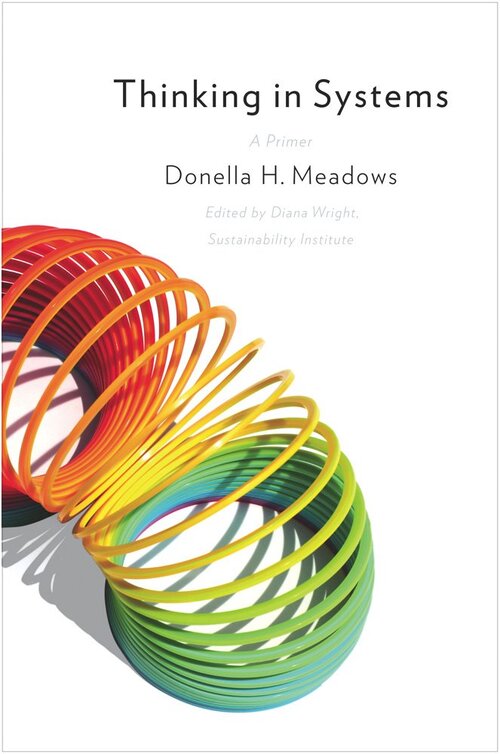
    What if I told you the key to lasting change isn’t willpower, but systems? Inspired by the groundbreaking work of Donella H. Meadows in “Thinking in Systems: A Primer”, this post explores how understanding systems thinking can revolutionize your approach to personal growth. We’ll dive into why traditional goal-setting often fails, and how intentionally designing the structure of your life – with consistent habits, feedback loops, and minimized friction – can unlock a self-sustaining engine of progress.

    What is a System anyway? (and why you should care!)

    We hear the word “system” everywhere. Political systems, economic systems, healthcare systems and even your morning routine is a system. But what actually is one?

    A system is more than just a collection of parts. It’s about how those parts interact. Meadows argues that a system is:

    “An interconnected set of structures that are organized in a way that produces a specific type of behavior.”

    Let’s break that down. It’s not just things (structure), it’s the relationships between them. Think of a simple thermostat system:

    • Structure: Thermostat, Heating, Room Temperature, You (setting the thermostat)
    • Relationships: The thermostat measures the room temperature. If it’s below your set point, it signals the heating to turn on. The heating heats up the room, raising the temperature. When the temperature reaches the set point, the thermostat signals the heating to turn off.

    “Once we see the relationship between structure and behavior, we can begin to understand how systems work, what makes them produce poor results, and how to shift them into better behavior patterns“

    – Donella H. Meadows

    Key characteristics of systems, according to Meadows:

    • Stocks & Flows: Imagine a bathtub. The water in the tub is the stock – it’s accumulated over time. The water flowing in and out are the flows. Stocks represent accumulations (like population, carbon in the atmosphere, money in a bank account), and flows change those accumulations.
    • Feedback Loops: As mentioned above, these loops can be reinforcing (amplifying a change – like compound interest) or balancing (stabilizing a system – like the thermostat).
    • Delays: Things don’t happen instantly. There’s often a delay between a cause and its effect. This can make it hard to understand what’s driving a system’s behavior.
    • Non-linearity: Small changes can sometimes have huge effects, and vice versa. Systems aren’t always predictable!

    Another interesting characteristic of systems is that to a large extent it causes its own behavior. An outside event may trigger that behavior, but the same outside event is likely to produce a different result for a different system. Sounds familiar?

    Beyond Motivation: Why Systems are the Key to Lasting Personal Growth

    We often approach personal growth with a focus on setting ambitious goals and summoning the willpower to achieve them. While intention is important, this approach may lead to frustration and a return to old patterns. The problem isn’t a lack of motivation; it’s a misunderstanding of how change actually happens. This is where the principles of systems thinking offers a powerful alternative.

    Meadows emphasizes that the behavior of any system – be it an ecological environment, a business, or you – is determined not by isolated events, but by its underlying structure. This structure comprises the elements within the system, the relationships between those elements, and the feedback loops that govern their interactions. Applying this to personal growth means recognizing that lasting change isn’t about sheer force of will, but about intentionally designing the structure of your life to support the behaviors you desire.

    Think of it like this: you can try to eat healthier by relying on willpower each time you face a food choice. Or, you can design a system where healthy food is readily available, unhealthy options are minimized, and meal preparation is streamlined. This shifts the burden from conscious effort to environmental design.

    Here’s how a systems-based approach to personal growth manifests:

    • Identifying Key Variables: What areas of your life do you want to improve? (e.g., fitness, learning, creativity). These are your key “stocks” – the accumulated results you’re aiming for.
    • Designing “Flows”: What consistent actions (habits, routines) will contribute to those stocks? These are the “flows” that influence your progress. Examples: daily exercise, reading for 30 minutes, journaling.
    • Creating Feedback Loops: How will you track your progress and adjust your approach? This could involve journaling, using habit-tracking apps, or seeking feedback from others. Positive feedback reinforces desired behaviors, while negative feedback signals the need for adjustments.
    • Minimizing Friction: What obstacles prevent you from taking those actions? How can you remove or reduce those barriers? This is about making the desired behaviors as easy and convenient as possible.
    • Leveraging Delays: Recognizing that many systems exhibit delays between action and result. This means being patient and consistent, even when you don’t see immediate progress.

    By focusing on structure rather than willpower, you create a self-reinforcing cycle of growth. Small, consistent actions accumulate over time, leading to significant results. This isn’t about achieving perfection; it’s about building a system that supports continuous improvement, even in the face of setbacks. It’s about shifting from a fragile reliance on motivation to a robust, self-sustaining engine of personal growth, all rooted in the principles of systems thinking.

    Further readings

  • Deep Work – more than productivity hack

    Deep Work – more than productivity hack

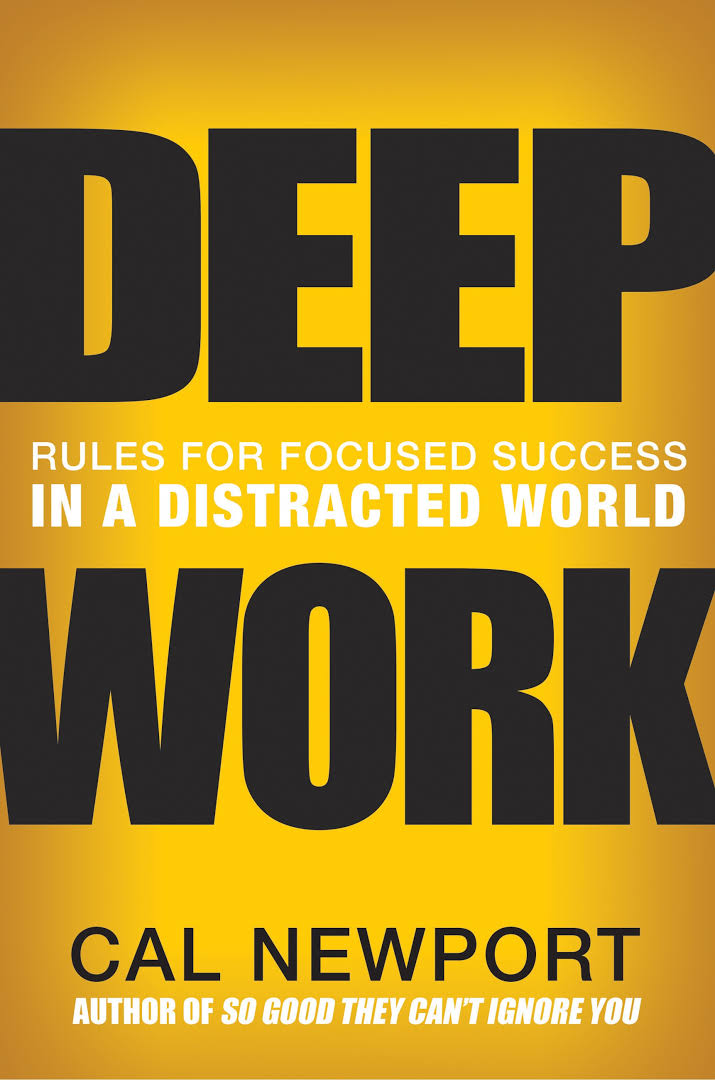
    For months, “Deep Work” by Cal Newport popped up in my social media feeds as a productivity bible, a game-changer for focus, and the key to thriving in a distracted world. Honestly, I was starting to wonder what all the hype was about!

    In a culture obsessed with “busy,” and where simply appearing productive often takes precedence, I decided to finally pick up a copy and see if Newport’s arguments held water. Because let’s be real, in a world that rewards hustle, it’s easy to fall into the trap of prioritizing quantity of work over quality.

    This book promises a path to doing the opposite – to produce truly meaningful work, and to do it with intention. In this blogpost, I’ll share what resonated with me, and ultimately, tell you whether or not this book lives up to its reputation.

    Is Your Work Valuable? (And Why It Might Not Be)

    Ever feel like you’re busy all day, but haven’t actually accomplished anything truly meaningful? You’re not alone. Cal Newport argues that we’re rapidly entering an economy where the ability to perform “deep work” – focused, distraction-free concentration that pushes your cognitive capabilities to their limit – is becoming increasingly valuable, and frankly, rare.

    He posits that routine cognitive tasks are increasingly being automated. And we see this already today, that certain tasks are being fulfilled by AI. With the rise of Agentic AI, this trend might get even more traction. This means being ‘busy’ isn’t enough nor “shallow work” is something we can expect to be paid for in future.

    In essence, deep work isn’t just a productivity hack; it’s a skill. The ability to deeply focus, to wrestle with complex problems without distraction, is becoming the most valuable skill you can possess.

    Deep work isn’t about working more; it’s about working differently. It’s about reclaiming your attention and intentionally cultivating the ability to focus intensely. If you’re feeling increasingly overwhelmed and unfulfilled in your work, or worried about the future of your career, understanding the principles of deep work might just be the key to not only surviving, but thriving in the years to come.

    Beyond the Hype: Where “Deep Work” Feels Shallow

    While Newport paints a compelling picture of a future demanding “deep work,” it’s easy to fall into the narrative of seeing it as a revolutionary prophecy rather than a nuanced observation.

    The AI Revolution: Prophecy or Premature Celebration? This book has a compelling case for the rising value of “deep work” in an age of automation, predicting a future where those who can think critically will thrive. But let’s be honest: the “AI revolution” has been perpetually “just around the corner” for decades. While AI is undoubtedly advancing, the claim that it will fundamentally reshape the economy and create a clear divide between “deep” and “shallow” workers feels optimistic, to say the least. It’s a compelling narrative, certainly, but one built on a lot of “what ifs” and a somewhat selective reading of technological history. Maybe shallow work will just move along as we do into new jobs and functions.

    Distraction Isn’t the Problem – Our Brains Are.

    The book frames the struggle for focus as a modern affliction, exacerbated by smartphones and social media. But this feels like treating a symptom, not the disease. The real issue isn’t the increase of distraction, but the decades-long conditioning of our brains to crave instant gratification. From sugary cereals marketed to children to the endless scroll of social media feeds, our environment has systematically trained us to seek dopamine hits, eroding our capacity for sustained attention. We’ve become addicted to novelty.

    The Lost Art of Deep Thinking: A Matter of Neuroplasticity.

    This conditioning isn’t just a matter of willpower; it’s a neurological reality. Our brains are remarkably plastic, meaning they adapt to the stimuli they receive. Years of constant stimulation and instant gratification have literally rewired our brains, making it harder to focus, concentrate, and engage in deep, complex thought. It’s not that we can’t focus; it’s that our brains have been trained not to. The challenge isn’t simply eliminating distractions; it’s actively retraining our brains to resist them. While eliminating distractions is a good start, I hoped to learn more about what we can do to revert this conditioning.

    Habits derived from “Deep Work”

    The following are three habits, I derived from this book.

    Habit: 15-Minute Drift

    Every day, at a set time (e.g., after lunch, before dinner), I dedicate 15 minutes to intentional doing nothing. I sit comfortably, close my eyes (or gaze softly out a window), and simply allow my thoughts to wander. No phone, no book, no music – just quiet observation of whatever arises.

    Why it Works: This isn’t laziness; it’s cognitive rest. Our brains aren’t designed for constant, focused attention. This “drift” time allows the Default Mode Network (DMN) to activate. The DMN is responsible for creativity, problem-solving, and consolidating memories. By letting your mind wander, you’re essentially letting your unconscious mind process information and recharge, leading to improved focus and deeper work when you do concentrate. It’s like defragging a computer.

    Shot-down ritual to have peace in mind of today’s work assignments, but plan for the next day. Especially relevant for home office work!

    Habit: Daily Closure

    At the end of my workday, spend 5-10 minutes to recap all loose ends. I review my completed tasks, quickly note any unfinished items, and specifically write down the 1-3 most important things I need to tackle first tomorrow.

    Why it Works: This ritual creates psychological closure. It prevents work from bleeding into your personal time, which is especially crucial when your office is in your home. The act of planning the next day reduces anxiety about what needs to be done, and prioritizing those 1-3 tasks ensures you start with the most impactful work.

    Habit: Time Blocking

    Every Sunday evening, I create a detailed schedule for the entire week, blocking out 30-60 minute segment for the most important, high-value tasks (the “payout” tasks) when my energy is highest. I treat these blocks as appointments I can’t break, and I strictly adhere to the schedule, including breaks and buffer time.

    Why it Works: This is a powerful application of Parkinson’s Law (work expands to fill the time available). By timeboxing, you create artificial deadlines that force focus and prevent procrastination. Prioritizing high-value tasks first ensures you make progress on what truly matters, even if unexpected things come up. The detailed schedule reduces decision fatigue (you don’t have to constantly decide what to work on) and promotes a sense of control over your time. It’s about being proactive, not reactive. Over time, you get a feeling on how long these blocks should be. If the task is not finished, don’t extend your block but start with the next task.

    Conclusion

    The fact that this book resonates with the audience underlines the problem that many face with concentrating especially at work. While there are already several productivity and time management practices laid out with concepts like Eisenhower Matrix, GTD or Pomodoro Technique, the most important aspect of this book to understand that distraction is present and you can do something about it.

  • Stop Chasing Happiness: The Secret to Actually Enjoy Life

    Stop Chasing Happiness: The Secret to Actually Enjoy Life

    We’re constantly told to find happiness. To seek it out, chase it, manufacture it. But what if happiness isn’t something you find, but something you experience – a byproduct of being fully engaged in life?

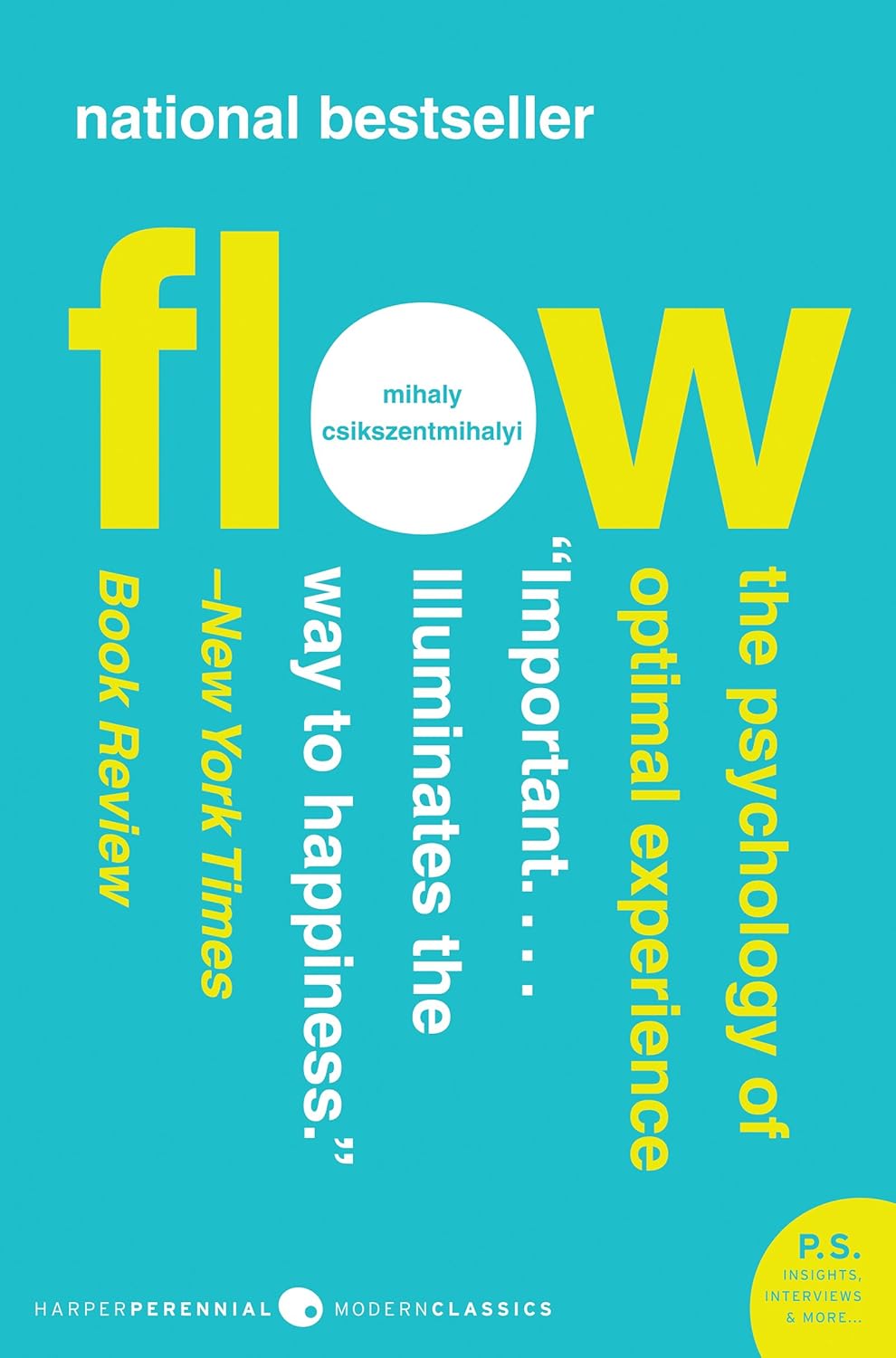
    Mihály Csíkszentmihályi, in his groundbreaking work “Flow – the psychology of optimal experience” argues exactly that. He reveals how our state of consciousness dramatically impacts our quality of life, and introduces the concept of “flow” – that feeling of complete immersion in an activity where time melts away and satisfaction surges.

    Could learning to cultivate this state of “flow” be the key to not just getting more done, but to living a richer, more fulfilling life? It’s time to stop chasing happiness and start designing experiences that naturally create it.

    I enjoyed this book so much, that I have to apologize for this more in depth blog post.

    What the heck is “flow”?

    Engaging in a captivating conversation with a friend often creates a flow experience, as ideas flow effortlessly and we become completely present with each other. During these moments, we lose track of time, fully immersed in the reciprocal exchange and building of understanding, feeling energized and deeply connected.

    Flow represents an intense focus on an activity that leads to a loss of self-consciousness and a feeling of great satisfaction. It’s akin to being in ‘the zone,’ where time seems to fly by, and you’re fully immersed in what you are doing.

    Mihály describes flow as the mental state that people often experience during activities that they find intrinsically rewarding. This combination leaves us with a impression of being self-fulfilled and happy.

    How to “go with the flow”

    Reaching a state of flow isn’t random; it requires certain conditions and an understanding of one’s own motivations and abilities. The interesting aspect is, that to some extent any given task can be transformed into a “flow” state.

    Mihály identifies several factors necessary for entering this optimal experience:

    Balance between challenge and skill

    One of the most crucial elements of achieving flow is finding a balance between the challenge of a task and your skill level. If a task is too easy, you become bored; if it is too difficult, you may feel overwhelmed. The sweet spot is similar to goal setting – you have to have 80% confidence in reaching the goal but leave a bit of “unknown” to make it challenging.

    Immediate Feedback

    Feedback during a “flow” state informs you whether or not you’re succeeding. It has to allow Rea-time assessment to stay in the present moment and in sync with your goals in order to progressing with the activity.

    Deep Involvement

    “Flow” requires full immersion in an activity. The sense of being deeply involved is characterized by the aforementioned concentration and a merging of action and awareness. When you are entirely absorbed, you are more likely to experience flow.

    The effect of a “flow” on your self

    Entering a state of “flow”, is more than just a means to achieve optimal performance or enjoyment; it’s an experience that has profound effects on the self. When you find yourself in flow, where your mind and body are fully engaged in what you’re doing, you don’t just accomplish tasks with heightened efficiency – you also undergo significant personal development.

    One of the remarkable outcomes of experiencing flow is the differentiation of the self. As we engage deeply with challenges and successfully navigate them, our sense of capability expands. Overcoming a challenge not only leaves us feeling more skilled but also enhances our understanding of who we are and what we can achieve.

    Flow experiences compel us to push beyond our perceived limitations, confronting tasks that stretch our abilities without exceeding them entirely. As we rise to meet these challenges, we gather evidence of our capabilities, which contributes to a richer sense of self. Each successful flow state is an opportunity for growth.

    This differentiation isn’t just about acquiring new skills; it’s also about refining them. The more we practice in the presence of clear goals and immediate feedback, the better we become at those activities, which further differentiates and develops our sense of self.

    Flow Integrates the Self

    In addition to enhancing our sense of differentiation, flow is instrumental in integrating the self. During a flow state, consciousness operates with exceptional clarity and orderliness. This profound level of focus aligns our thoughts, intentions, feelings, and senses toward a single goal. Everything converges harmoniously, which facilitates not just an efficient performance but also a unified experience!

    When we are fully immersed in an activity, there’s no room for internal conflict or distraction. Our cognitive processes synchronize with our actions, creating a seamless interaction between mind and body. This integration fosters a sense of wholeness—an alignment of all aspects of the self that contributes to a more coherent identity.

    By consistently experiencing flow, we train ourselves to enter this state of well-ordered consciousness more readily. Over time, this can lead to a general improvement in our ability to focus and integrate various elements of our lives, resulting in greater personal harmony.

    „Flow helps to integrate the self because in that state of deep concentration consciousness is unusually well ordered.“

    Source: Mihály Csíkszentmihályi’s “Flow”

    The aftermath of a flow experience often leaves individuals feeling more connected—not only internally but also with others and the world around them. When thoughts, intentions, feelings, and senses are harmonized toward a common objective during flow, this unity spills over into other areas of life once the activity concludes.

    Does the “Flow” state have any side effects?

    What if your goals aren’t truly your own, or if you set them so easily that they stifle personal growth? Perhaps you’re pursuing goals that lack real meaning, simply to feel a temporary sense of accomplishment.

    This implies that with the wrong boundaries you can flow as much as you want but still stall or drift into the wrong direction. This depends on the information that keeps coming into awareness is congruent with your goals. If the information is reinforcing your goals you will experience flow.

    I am not certain yet if this is a good or a bad thing. Due to lack of better knowledge I stick to my explanation in the Goals are for losers post. As long as the net sum of energy you invested vs. gained out of your flow activity is positive, it is a good thing to continue.

    Maybe there is another book that has the answer.

    Habits to cultivate “flow”

    As mentioned earlier with a bit of practice, flow state can be achieved with by intention. The following habits might be of help.

    Practice focused attention:

    Action: Schedule dedicated blocks of time (e.g., 25-minute Pomodoro sessions) for uninterrupted work on a single task. Consciously redirect your attention back to the task whenever your mind wanders.

    Why it works:  Flow isn’t something that just happens; it requires practice. Training your ability to focus and resist distractions strengthens the neural pathways needed to enter and sustain a flow state.

    Challenge Yourself (but not too much):

    Action: Before starting any activity, define specific, manageable objectives. Break down larger tasks into smaller, actionable steps. Choose activities where the challenge matches your abilities – not so easy you’re bored, but not so difficult you’re overwhelmed. Regularly push your skills slightly beyond your current comfort zone.

    Why it works: Flow arises when skill and challenge are balanced. A moderate level of difficulty keeps you engaged and motivated, requiring focused effort without inducing anxiety or frustration. Clear goals provide direction and a sense of purpose, allowing you to focus your attention and measure progress.

    Conclusion

    What makes “Flow” particularly fascinating is its grounding in scientific research and psychological principles, providing a more empirical perspective compared to Eckhart Tolle’s “The Power of Now,” which leans towards spirituality. While both books share themes about living in the present moment, Csíkszentmihályi offers insights that are deeply rooted in observable phenomena, making it an excellent read for those interested in how our minds work and how we can optimize our mental states for a better life.