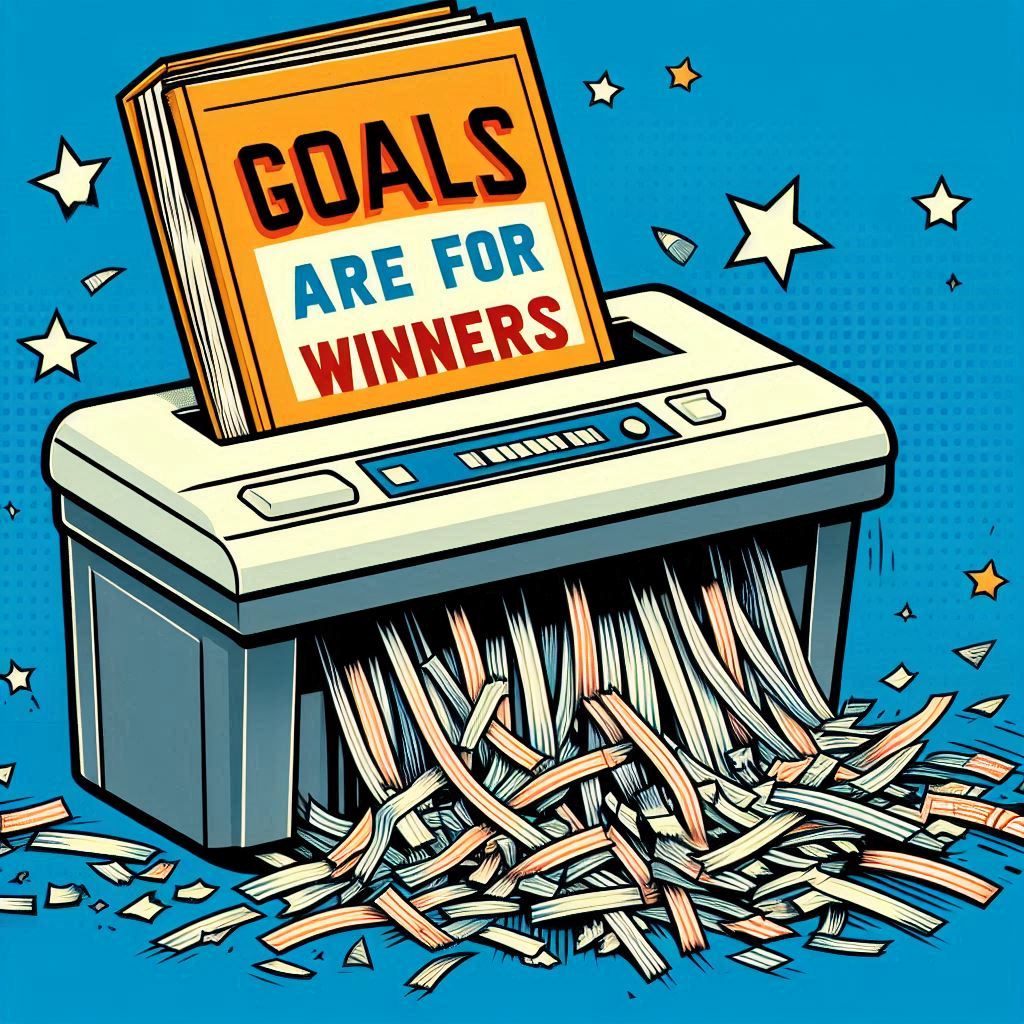
Tag: goals

  • Unlock Your Potential by Asking the Right Questions

    Unlock Your Potential by Asking the Right Questions

    In an age of instant information – where answers to almost anything are just a Google search or LLM prompt away – it’s fair to ask: is knowledge really that important anymore? Why commit to a lifetime of learning when information is so readily available? Let’s explore whether the pursuit of knowledge still holds value in a world obsessed with quick answers.

    Not knowing is default for everyone

    “Not knowing” is the default state for all of us, and for much of history, simply finding information was the challenge. So why go to school? While the stories of successful dropouts capture headlines, they represent the exception, not the rule.

    Formal education isn’t solely about accumulating facts; it’s about building a foundational understanding of core concepts. More crucially, it’s about learning how to learn – cultivating the skills to independently acquire knowledge, critically evaluate information, and adapt to a changing world. Ideally, education should spark curiosity, igniting a commitment to lifelong learning that extends far beyond the classroom and empowers us to navigate complexity with confidence.

    Applying knowledge matters

    Knowing about something isn’t the same as knowing how to do it. Applying knowledge is about intentional action – taking what you’ve learned and actively using it to solve problems or create something new.

    Consider Pythagoras’ theorem – most of us learned it in school, but how often do we consciously use it in daily life? Perhaps you’re hanging a picture and need to ensure it’s level, or calculating the diagonal length of a new TV to see if it fits in your space. These seemingly small applications demonstrate the power of translating abstract knowledge into practical solutions. It’s in these moments that learning truly comes alive.

    But what happens when you have the knowledge, yet still struggle to apply it – that frustrating gap between understanding and execution? The best course of action isn’t to beat yourself up, but to question the knowledge itself.

    Revisit the fundamentals, ask clarifying questions until you arrive at the same understanding consistently, and then, crucially, ask yourself: ‘What do I need to know to start applying this?’

    Break down the task into smaller, manageable steps, and focus on the specific skills or information you’re lacking. It’s through this iterative process of questioning, refining, and applying that true mastery emerges.

    Learning is to ask the right questions

    True learning isn’t about passively receiving information; it’s about actively seeking it through thoughtful questions. Asking questions isn’t just a sign of curiosity, it’s a demonstration of intellectual humility – acknowledging what you don’t know.

    For many, this takes courage, as exposing gaps in our knowledge can feel vulnerable, a perceived weakness. But this fear is misplaced. Consider the foundation of all scientific discovery – it began with a question.

    Beyond personal growth, questioning is a powerful leadership tool. A well-placed question doesn’t just prompt you to rethink assumptions, it forces those you direct it towards to critically examine their own perspectives.

    So, how do we learn to ask the right questions? That’s a fantastic starting point for any journey of learning.

    Habits to cultivate a curious mind

    Turning questioning into a habit requires conscious effort, but the rewards are significant.

    1. The ‘Five Whys’ – Uncovering Root Causes

    • How to Implement: When you encounter a problem, statement, or situation, start by asking “Why?” After you receive an answer, ask “Why?” again about that answer. Repeat this process five times (or until you reach a fundamental reason).
    • Why it Works: This technique bypasses superficial explanations and forces you to drill down to the core of an issue. Often, the initial answer is a symptom, not the root cause. Each “Why?” peels back a layer, revealing deeper insights and prompting more targeted questions. It’s incredibly effective for problem-solving, process improvement, and understanding complex systems.

    2. Assumption Busting – Challenging Your Beliefs

    • How to Implement: Consciously identify your assumptions about a topic, situation, or person. Then, actively ask yourself, “What if my assumption is wrong?” Explore the implications of that possibility. Consider alternative explanations and perspectives.
    • Why it Works: We all operate with ingrained biases and assumptions. These can blind us to new information and limit our understanding. Challenging these assumptions forces us to think critically, consider different viewpoints, and avoid making hasty judgments.

    3. The Beginner’s Mind – Embracing Curiosity

    • How to Implement: Approach every situation as if you know nothing about it. Ask basic, seemingly obvious questions – “What is this?”, “How does it work?”, “What are the fundamental principles at play?”. Resist the urge to rely on pre-existing knowledge or make quick assumptions.
    • Why it Works: When we think we already know something, we stop truly seeing it. The beginner’s mind cultivates a state of open-mindedness and curiosity, allowing us to absorb new information and identify gaps in our understanding. It prevents us from falling into the trap of confirmation bias to seeking out information that confirms our existing beliefs.

    By consistently practicing these habits, you’ll not only improve your ability to ask better questions but also cultivate a more curious, open-minded, and insightful approach to learning and problem-solving. It does not take much, to stand out of the crowed.

    For all the book worms, I recommend reading “QBQ! The Question Behind the Question: Practicing Personal Accountability in Work and in Life” by John G. Miller.

  • How Systems Thinking Can Unlock Lasting Personal Growth

    How Systems Thinking Can Unlock Lasting Personal Growth

    We’ve all been there: fired up with New Year’s resolutions, ambitious goals, and a surge of motivation… only to find ourselves backsliding within weeks. Why does personal growth feel so hard? The problem isn’t a lack of desire, but a flawed approach. We often focus on what we want to achieve, neglecting how we’ll actually get there.

    What if I told you the key to lasting change isn’t willpower, but systems? Inspired by the groundbreaking work of Donella H. Meadows in “Thinking in Systems: A Primer”, this post explores how understanding systems thinking can revolutionize your approach to personal growth. We’ll dive into why traditional goal-setting often fails, and how intentionally designing the structure of your life – with consistent habits, feedback loops, and minimized friction – can unlock a self-sustaining engine of progress.

    What is a System anyway? (and why you should care!)

    We hear the word “system” everywhere. Political systems, economic systems, healthcare systems and even your morning routine is a system. But what actually is one?

    A system is more than just a collection of parts. It’s about how those parts interact. Meadows argues that a system is:

    “An interconnected set of structures that are organized in a way that produces a specific type of behavior.”

    Let’s break that down. It’s not just things (structure), it’s the relationships between them. Think of a simple thermostat system:

    • Structure: Thermostat, Heating, Room Temperature, You (setting the thermostat)
    • Relationships: The thermostat measures the room temperature. If it’s below your set point, it signals the heating to turn on. The heating heats up the room, raising the temperature. When the temperature reaches the set point, the thermostat signals the heating to turn off.

    “Once we see the relationship between structure and behavior, we can begin to understand how systems work, what makes them produce poor results, and how to shift them into better behavior patterns“

    – Donella H. Meadows

    Key characteristics of systems, according to Meadows:

    • Stocks & Flows: Imagine a bathtub. The water in the tub is the stock – it’s accumulated over time. The water flowing in and out are the flows. Stocks represent accumulations (like population, carbon in the atmosphere, money in a bank account), and flows change those accumulations.
    • Feedback Loops: As mentioned above, these loops can be reinforcing (amplifying a change – like compound interest) or balancing (stabilizing a system – like the thermostat).
    • Delays: Things don’t happen instantly. There’s often a delay between a cause and its effect. This can make it hard to understand what’s driving a system’s behavior.
    • Non-linearity: Small changes can sometimes have huge effects, and vice versa. Systems aren’t always predictable!

    Another interesting characteristic of systems is that to a large extent it causes its own behavior. An outside event may trigger that behavior, but the same outside event is likely to produce a different result for a different system. Sounds familiar?

    Beyond Motivation: Why Systems are the Key to Lasting Personal Growth

    We often approach personal growth with a focus on setting ambitious goals and summoning the willpower to achieve them. While intention is important, this approach may lead to frustration and a return to old patterns. The problem isn’t a lack of motivation; it’s a misunderstanding of how change actually happens. This is where the principles of systems thinking offers a powerful alternative.

    Meadows emphasizes that the behavior of any system – be it an ecological environment, a business, or you – is determined not by isolated events, but by its underlying structure. This structure comprises the elements within the system, the relationships between those elements, and the feedback loops that govern their interactions. Applying this to personal growth means recognizing that lasting change isn’t about sheer force of will, but about intentionally designing the structure of your life to support the behaviors you desire.

    Think of it like this: you can try to eat healthier by relying on willpower each time you face a food choice. Or, you can design a system where healthy food is readily available, unhealthy options are minimized, and meal preparation is streamlined. This shifts the burden from conscious effort to environmental design.

    Here’s how a systems-based approach to personal growth manifests:

    • Identifying Key Variables: What areas of your life do you want to improve? (e.g., fitness, learning, creativity). These are your key “stocks” – the accumulated results you’re aiming for.
    • Designing “Flows”: What consistent actions (habits, routines) will contribute to those stocks? These are the “flows” that influence your progress. Examples: daily exercise, reading for 30 minutes, journaling.
    • Creating Feedback Loops: How will you track your progress and adjust your approach? This could involve journaling, using habit-tracking apps, or seeking feedback from others. Positive feedback reinforces desired behaviors, while negative feedback signals the need for adjustments.
    • Minimizing Friction: What obstacles prevent you from taking those actions? How can you remove or reduce those barriers? This is about making the desired behaviors as easy and convenient as possible.
    • Leveraging Delays: Recognizing that many systems exhibit delays between action and result. This means being patient and consistent, even when you don’t see immediate progress.

    By focusing on structure rather than willpower, you create a self-reinforcing cycle of growth. Small, consistent actions accumulate over time, leading to significant results. This isn’t about achieving perfection; it’s about building a system that supports continuous improvement, even in the face of setbacks. It’s about shifting from a fragile reliance on motivation to a robust, self-sustaining engine of personal growth, all rooted in the principles of systems thinking.

    Further readings

  • On taking Risks – how to make sure to stay in the game

    On taking Risks – how to make sure to stay in the game

    Every single thing you do in life is based on some calculation of risk versus reward. Even your decision of getting out of bed every morning. But live is not about avoiding risks but about knowing which ones are worth taking.

    No guts, no glory

    Life means taking risks. It comes in different flavors and individual tolerance to each of us. Chances that you die because of heart decease are 80 times higher, than getting run over by a car according to the National Safety Council.

    Let me tell you a story about me being irrational about taking risks:

    My former girlfriend and I spent seven wonderful years together, and decided it was finally time to take the plunge and pop the big question. I planned the perfect moment during our ski trip in the beautiful Alps, with the sun shining and stunning views surrounding them.

    But as the first day of skiing passed, I felt butterflies fluttering in his stomach—but they weren’t just from the chilly mountain air. I had the engagement ring tucked neatly in my pocket, but every time I thought about proposing, my courage took a nosedive. The next day began with the same anxious routine.

    Panic set in when a startling thought hit me: what if something terrible happened and I missed my chance? That realization fueled my determination.

    On our break at a breathtaking spot, I took a deep breath, dropped to one knee, and finally asked my girlfrien to marry me. The combination of the stunning landscape and my finally heartfelt words made it an unforgettable moment.

    Each of us is unique, and so are our experiences. If after reading this story you wonder, “What’s wrong with this person?” that’s fine, as you might act differently.

    I wanted to share the story of proposing to my wife because it’s a perfect example of how taking risks can feel strange initially. Your body will literally try to make you stop. Emotions are the language of our bodies, and they may activate and spark thoughts or doubts about your plan simply because your body is not yet accustomed to what your mind intends.

    Most of what you’ll do for the first time feels like uncharted territory. The truth is: it is not. While you and I feel unique and special with our life situation, dreams and actions reality is it is not so unique as you think. You are not alone.

    In order to understand if the risk you are about to take is worth it, seek to understand if someone in this great wide world had already a similar challenge and shared it. From my experience Reddit is a great platform for asking such questions.

    Be Curious and upmost optimistic

    Avoiding risks is the worst you can do in your life. You and I are exposed to risk every morning we stand up. But hiding in bed will not lead to a fulfilled life.

    Hiding in bed will not lead to a fulfilled life.

    Whatever you do, commit fully. No half-hearted efforts. Your life is precious and deserves more than mediocracy. Your attitude required to take especially significant calculated risks must be utmost optimistic.

    Pursuing your dreams with all the risks included will bring numerous challenges. Your body may urge you to stop, as it feels uncomfortable. Family and friends might struggle to understand your vision and try to dissuade you. Even your surroundings might deem your plans ridiculous. Approach these headwinds with curiosity. Examine the underlying forces that fuel these arguments and the rationales behind them.

    And things will fail. You can calculate and plan for every risk expect the things that are too crazy for you to imagine. These are the ones that will do the most harm as you will not have a plan for how to deal with them.

    But the world advances, and so will you. That is why you should fail early and often. The sooner you fail and learn from it, the more likely it is that the negative impact of the risk will lessen over the course of your life. See also my post about planning.

    Be Mindful, Not Afraid

    Sh*t happens – that is why you should be mindful of the endeavors with significant risks and know that failure is part of the game. The only certain advice I have when it comes to risk taking: Don’t take risks that mean game over for you. By this I don’t imply end of your life – which is obvious to avoid, but will this drop you out of whatever you are up to?

    Fear of missing out: FOMO became famous in the context of the Crypto / Bitcoin hype. It is the anxiety or worry that you might miss an exciting or rewarding experience, and it can lead to impulsive, poorly thought-out decisions driven by the desire to avoid feeling left out or regretful.

    Overconfidence: What you should truly be wary of is taking substantial risks without any thought, which often happens when you’ve done something countless times before. But this one time, you overlook a changed parameter and, possibly in a hurry, do what you always do—potentially making things worse.

    Leveraged risk: Buying stocks using borrowed funds or adding additional people for your project to meet a deadline that is already on the critical path.These tactics might work out, but will multiply the risk with the potential consequence of you losing it all at cost of your reputation or financial bankruptcy.

    Single points of failure: If too many things of you plan rely on one thing working. Since if this fail your entire plan will fall apart.

    The Art of Risk-Taking: Habits to Keep You in the Game

    1. Habit of Taking Calculated Risks

    • Action: Evaluate potential opportunities and challenges, then make a decision to take action even if the outcome is uncertain.
    • How it Works: This habit involves a thoughtful assessment of risks and benefits. By gathering information, considering possible outcomes, and then acting, you can make informed decisions that push you out of your comfort zone while minimizing potential downsides.

    2. Habit of Persistence

    • Action: Continue to pursue goals despite obstacles and setbacks.
    • How it Works: Persistence requires a mindset that does not give up easily. When faced with challenges, this habit involves seeking alternative solutions, learning from failures, and continually moving forward. Many successful people attributes much of their success to persisting through difficulties and not allowing temporary setbacks to derail his long-term goals.

    3. Habit of Seeking Mentorship and Guidance

    • Action: Actively look for mentors and listen to their advice and experiences to guide your own journey.
    • How it Works: Mentors can provide valuable insights, support, and wisdom based on their own experiences. Seeking mentorship involves identifying individuals who have achieved what you aspire to and building a relationship with them.

    Further readings

  • Goals are for losers! How to win with habits

    Goals are for losers! How to win with habits

    If you consistently failed achieving goals, this is for you. For all the professional goal chasers, hear me out and judge later.

    Goals are a fundamental part of our lives. When I ask my son what he wants to make for a living as grown-up, his answer is: I want to be an explorer digging for dinosaurs bones and lost treasures. This is one type of goal called „approach motivation“  to pursue positive outcomes or experiences. Then there is another side of the goals medal, which most likely all of us already experienced: I have to study hard this weekend so I don’t fail this time at my exam. In this example, the primary motivation is not to achieve a high grade or excel in the subject (which would be approach-motivated), but rather to avoid the negative consequence of failing the exam. This is called „avoidance motivation“, where the focus is on steering clear of an undesirable outcome. 

    Demotivating facts about goals

    At the end it does not matter which team you belong to. What matters is, that we tend to set ourselves goals in order to reach a dedicated state of approaching or avoiding something we have in mind. 

    What both motivations ultimately boil down to is the question: is the goal accomplished? And to me, there is only a binary answer to that – yes or no. Of course you could say „I am half way there“ or „almost accomplished“. But if you look a the to-do list of yours that says „[ ] – laundry“, the answer is either check marked or not. 

    So until your goal is reached, you are in a constant state of continuous failure. This might become uncomfortable over time depending on how you designed your goal. The incompleteness of the goal could manifest in an constant reminder of you not being good enough. And exactly this is the problem I have with goal orientation. 

    SMART goals ain’t silver bullets either

    A this point the more advanced users of goal setting might chime in and state that „[ ] – laundry“ is not a good goal. The golden standard for goals is to define them as SMART. A SMART definition of my previous example „[ ] – laundry“ could be „I will wash, dry, and put away all my clothes that are currently in the laundry basket by 5 PM this Sunday“. The abbreviation SMART goals stand for is the following:

    • Specific: Wash, dry, and put away all the clothes in the laundry basket.
    • Measurable: All clothes in the laundry basket will be clean and stowed away.
    • Achievable: If the washing machine and dryer are working it is a realistic task given.
    • Relevant: Keeping clothes clean and organised is important for personal hygiene and maintaining a tidy living space.
    • Time-bound: Complete by 5 PM this Sunday.

    But even the SMARTest goal won’t make you „immune“ to the following: Once you achieve your goal it is time to celebrate. You feel terrific and enjoy the well earned fruits of accomplishing something – until, inevitably, the novelty wears off. You might start to realise you just lost the one thing that gave you direction. And your gut feeling is telling you that you need to fill this void with another goal. Perhaps a bigger one this time. So you settle for new goals and start a new cycle. This is until you reach a state of your own highest incompetence and get aware of that by missing one goal after the other you set to accomplish. 

    And don’t get me started with midlife crisis – if you are not in that position (yet) let me share what it felt for me. I was biased that a fulfilled life is when you have a family, an own house, a career with no financial worries what so ever. This is what I accomplished and I am grateful for everything that brought me here. But the emptiness of not knowing what to settle next was more of a topic for the past few years as I would like to admit and it drew a lot of my energy and attitude. It made me bitter and jealous of friends who had something to pursue.

    Systems as alternatives to goals

    The underlying principle of setting goals is to have guiding principles to align our behaviour and actions on a day-to-day basis in order to reach a desired state. Goal setting is not the only way to influence our behaviour in a positive streamlined manner. 

    „You don’t have the be the most intelligent, but have a plan“ used to be a saying of my grandpa. It took me some time to figure out what exactly he meant with it. 

    In short my plan instead of entering the hamster wheel of goal setting is the following: 

    1. Have a rough idea about the desired state in a broad context, 
    2. Ask yourself daily what to do next, to get closer to this state
    3. Plan for it making sure the activation energy is as low as possible 
    4. Just do what you planned – no excuses! celebrate every iteration.
    5. Reflect if the desired state is still what you want. Proceed with step 2.

    Let us take an example of a common new years eave goal: Loose some weight. With a goal oriented approach you would most likely try some diet plans and / or subscribe and go to the gym. 

    1. Have a rough idea: In a system based approach you start with a rough idea about the desired state. My rough idea in the context is: be a healthy person. How is the weights of someone who is considered as healthy? It depends! It depends on your age, your medical condition, your environment, latest studies about BMI etc. But health is only one factor. Strength, stamina – there are many factors you could come up with that characterise a healthy person. This may even include your sleep and you might want to consider to stop doom scrolling your social media apps.

    2. Reflect what can I do to become a healthy person? You will end up with a long list of ideas. But what is of importance here is what can you do almost immediately. 

    • Walk instead of driving
    • Skip the sweets
    • Subscribe to gym online

    In step 3. just do it according to you plan you take it to the next level, so your next best action does not take dust. It is a trick to overcome your weaker self and prepare the task well so you eliminate all room for potential excuses to get started:  

    • If you want to walk instead of driving then block your time in your calendar for the next day.
    • Skip the sweets and add healthy snacks to your shopping list
    • Subscribe to gym online and prep your sports bag and put it in your car already. Or wear your sports shirt under your clothes the next day.

    I like to compare this approach with navigation on sight. Think of yourself as a captain that has to navigate ship in unknown seas without any deterministic tools. Because in most of the cases it is similar to any new situation we are in. We know that we want to get somewhere, our desired state, but don’t exactly how. Such a system based approach comes with the benefit, that it puts your actions into a broader context with a real intent. Allowing you to take advantage of any measure that helps to reach the desired state.

    Now if you think, that this is only applicable for personal aspirations. I have another comparison for you in the area of Projectmanagement which is the waterfall model and agile methodologies. You will figure out what is goal based and system based once you research it. 

    In short: It is about establishing a system of incremental progress – baby steps if you will – towards a rough idea of where or what you want to be. Introducing a level of flexibility towards how to achieve it. It lifts the burden of knowing that you have something unaccomplished yet.

    How to transition from traditional goal based approach to a system based approach is a post by itself – I am happy to follow-up on this if you are interested. With this I conclude my last blogpost for 2024. I would love to hear from you. Subscribe to stay with me on these topics. Looking forward for your thoughts on this. 

    Conclusion

    • Goals in all forms are an orientation of the direction we strive
    • Good goals are SMART, but most people are not smart setting their goals.
    • Once you acchieved all your goals you might feel a void, that needs to be filled.
    • If not achieved, most of us feel miserable – the same is true in the phase until achieve.