Tag: mindset

  • You’re an expert – how to make money with it

    You’re an expert – how to make money with it

    “Expert Secrets” is a comprehensive guide by Russell Brunson that teaches us how to become really good at something and share it with others. It encourages you to make friends with lots of people who like what you do. And to turn those friends into happy customers.

    It is a great a blueprint that guides you step-by-step on this journey. While it primarily addresses entrepreneurs and business owners a loyal following is valuable for any professional and is an important aspect of personal growth.

    Key concepts outlined

    I highly recommend reading through this book end-to-end. To my surprise it starts off actionable steps without further ado. Brunson starts with the thesis that everyone of us has some kind of expert knowledge. It is based on your core beliefs and passions. He gives the example that he sold DVDs on how to build a potato gun, because this is something he did for himself.

    Once you identified your area of expertise, you need to define your ideal customer and understand their needs, desires and challenges. From there it is about developing your persona that resonates with the audience of customers and tell your story.

    Share your origin story, which highlights your struggles, breakthroughs and successes. This is the foundation for a community where your followers can connect, engage and support each other.

    Consistency and authenticity with your audience is the key, but also the hard part. Similar to what every blogger tries to achieve as well.

    Habits to derive from Expert Secrets

    Based on the content of “Expert Secrets” by Russell Brunson, I derived three habits that you can cultivate to build your expertise, grow an audience, and drive business but also personal growth:

    1. Regularly share your story, experience and insights with your audience

    This habit is about cultivating your story telling skills. By regularly sharing your story you will reinforce your message and you authority for a topic. This will help to build a stronger connection to your followers and position you as an authentic and relatable expert. But continuously refining and updating your origin story as you evolve and grow.

    I am not there yet, as you can see from the activities on my social media accounts. My story is to share all I read, learn and apply to thrive for success and a fulfilled live. But when it comes to regular updates I mostly overthink what is worthwhile to share. This makes me feel like I missed the spontaneous moment.

    But it is on my list for this year – simply because I want to improve my story telling skills but also connect more with you.

    2. Continuous learning is a must for every expert

    This habit helps you stay informed about the latest trends, identify opportunities for improvement, and create innovative strategies for your endeavour.

    Subscribing to industry publications, blogs, and podcasts. While I love to read primary literature about topics because it gives me the unfiltered facts, I understand that this is not for everyone. I see podcasts as alternative to this, as most of the podcast content creators pick up more recent topics and you don’t have the risk of being exposed to GPT generated content (for now). Hard Fork is one of my favourites when it comes to technology trends.

    Joining online communities and forums to discuss your expert topics is also a good way to stay up-to-date. This will allow you to also contribute and proof your experts knowledge. Because you only have truly understood a topic, if you can teach it to someone.

    In case you can’t find any good resources, it might be a good idea to be the one who starts it.

    3. Engage with your community and other experts

    Proactively engage with your audience and foster a sense of community around you is one of the goals Brunson suggested in his book.

    This is a no-brainer, if you already have followers. For those of you, who are at the beginning I’d suggest to do what Dale Carnegie suggests in his book “how to win friends and influence people“: pace. Find someone on social media who is in the context of your expert knowledge and comments a lot. Follow his or her lead and comment the posts with what you have in mind.

    Do it consistently every day and maybe you’ll find new friends. At least this will establish your habit of engaging with others online regularly. From there you could go further of creating a forum or group for your followers to connect and engage on a more “exclusive” channel.

    Conclusion

    • Each of us is an expert in something. This knowledge is of worth for others.
    • Examine if your expert knowledge is already in a niche. The more specific you are able to describe your knowledge, the easier it will be to find and address your audience.
    • Selling your expert knowledge for a living take some marketing efforts – therefore share your story and connect with friends over social media, a meal, or a shared hobby.

    Further readings

  • Planning personal growth done right?

    Planning personal growth done right?

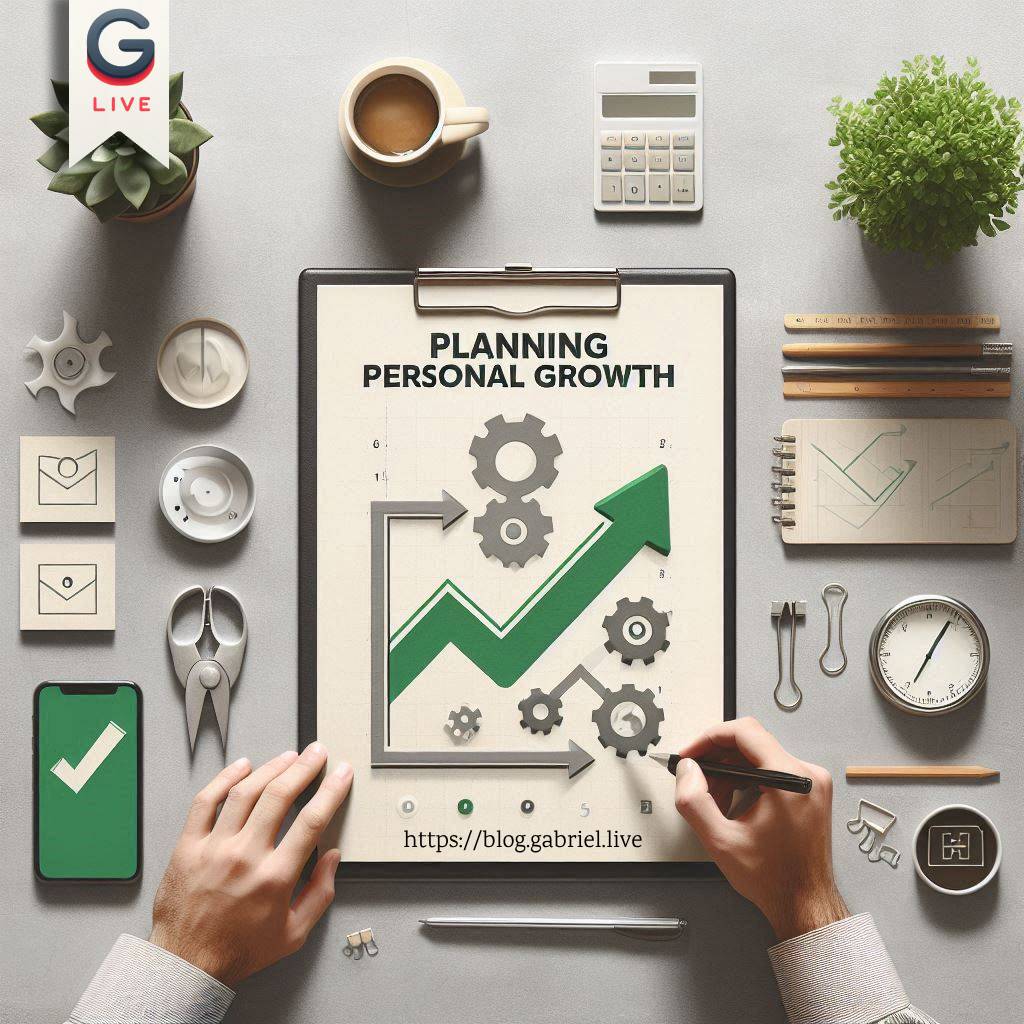
    When you are young and see your future self thriving, achieving dreams, and growing into the person you aspire to be. Once you grow older, you might catch yourself saying “I had big plans”. Or even be sad about the fact, that your plans didn’t work out yet.

    Most of the people I know get the planning wrong, as their plans don’t survive reality. It is not only the plan itself, but the process of planning itself. It helps you figure out if what you’re doing right now makes sense.

    You don’t have to be smart, but have a plan

    People often think success comes from being intelligent. But having a good plan can be just as important, or even more important. While smart people think fast, a plan offers structure and direction. It is a blueprint for anyone, regardless of their intellectual abilities, to achieve their goals.

    With defined steps in place, you can navigate obstacles with confidence and focus, ensuring that your efforts are aligned with your objectives. Having a good plan and thinking ahead means you don’t have to rely on sudden, brilliant ideas. It shows that steady, step-by-step efforts can make up for not being the smartest.

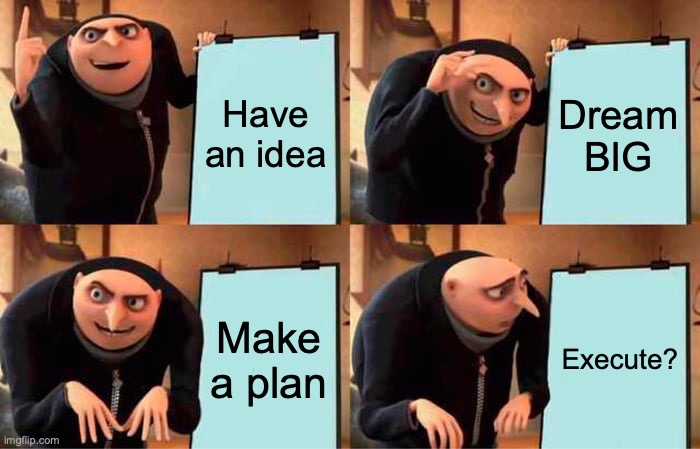
    Gru on planning, but missing execution step

    You plan, God laughs

    The trouble with plans is that only those that work in the real world are helpful. Exactly this is the hard part of planning and we will get to that.

    But even bad plans are better than nothing. Because the process of planning is equally important as the plan itself. Crafting a plan helps in cultivating valuable skills such as discipline and time management. When you work with a plan, you are more likely to develop a problem-solving mindset, as the process requires thinking ahead and analyzing potential outcomes. This strategic approach encourages continuous learning and adaptability, which are crucial traits in any field.

    Hope for the best, plan for the worst

    Even if you don’t have all the answers at the onset, a plan allows you to identify resources and support systems you may need, ensuring that you are not working in isolation. Planning helps us do things better. It shows that anyone can succeed if they organise, try hard, and keep going.

    What makes a good plan?

    Our future is filled with unknowns – this is reality for all of us. A good plan does not pretend this was not true. It embraces the this fact with room for errors. Because the more you need specific elements in your plan to be true, the more fragile your plan becomes.

    Margin for mistake can come in different forms for you plan and planning process:

    • Loose timeline: Not relying that e.g. you have to master a skill by a defined deadline. If you do, this will be a bonus on top, but if you don’t, there should not be extra punishment.
    • Flexible thinking: This could be a wiggle room for interpretation of your personal growth aspiration. Loosing five pounds in three months might be harder to achieve than becoming someone that lives healthy. See also goals vs system oriented thinking.
    • Use of resources: Be it time, money, machines or other people – you can adopt the way on how you make use of it. Being cost-effective or extravagant might help in overcoming the challenges you might face.

    I got it wrong for so many years that leaving room for error has nothing to do with being conservative. Conservative thinking is about avoiding a certain level of risk. You do not want to limit yourselves, especially if it is about personal growth plans.

    Following this advice you are planning for what is not going according to your plan. I feel that especially the wiggle room for mistakes in planning is under appreciated. If considered well it will raise your odds to succeed by allowing you to stay on course with your plan. It allow you to change course without abandoning the whole plan and start over again or even worse quitting.

    But keep in mind: Even your best plan is just an idea unless you put it into action.

    Conclusion

    • A plan is the lynchpin between your intention and the actual action. 
    • Plans are only useful, if they can survive reality. And all our future reality is filled with unknowns.
    • Many plans don’t work out not because they’re bad, but because they’re just okay when they actually need to be perfect.

    Further readings:

  • My Personal Growth Reading List for 2025

    This is my backlog of books for this year. Most of these books are in the context of self-development and mindfulness. Looking forward to learn about the parallels and new aspects proclaimed by the authors. In case there is something worth to share I will provide a summary of it in the books section. Subscribe to my newsletter, if you’d like to receive it directly in your inbox.

    Also happy to hear from you in the comments section below, if you are missing something.

    Book cover: "the Science of Getting Rich" by Wallace D. Wattles

    The Science of Getting Rich (read)

    by Wallace D. Wattles

    This book was written in 1910 and mentioned in “the science behind ‘the Secret‘” as inspiration for the bestseller by Bryan. It is a practical description of the “law of attraction”.
    Find it on amazon.

    Book cover: "The Biology of Belief" by Bruce H. Lipton

    The Biology of Belief (read)

    by Bruce H. Lipton

    I saw Bruce on YouTube explaining his discovery that it is not genes that impact how our cells behave, but impulses from our environment. By controlling our environment, we could influence who we are – will be an interesting read.

    Find it on amazon.

    Book Cover: "Outlive: The Science and Art of Longevity" by Peter Attia MD

    Outlive: The Science and Art of Longevity (read)

    by Peter Attia MD

    Self-improvement is not just for the brain, but also for the body. Maybe this book is worth the time.

    Book cover: "Flow - the psychology of optimal experience" by Mihaly Cziskzentihalyi

    Flow (read)

    by Mihaly Csikszentmihalyi

    Would it be weird if I say, that I am addicted to the flow moment? I need to understand the rational behind it.

    Book Cover Deep Work by Cal Newport

    Deep Work (read)

    by Cal Newport

    I am curious about why this book is so popular. To which extent are people having trouble to focus on their work and what exactly does Cal recommend to do about it.

    Book cover: "Power vs. Force" by David R. Hawkins

    Power vs. Force

    by David R. Hawkins

    This book was mentioned in a Podcast about emotions. It is about the hidden determinations of human behaviour based on the research around kinesiology.

    Book cover: "This is Marketing" by Seth Godin

    This is Marketing

    by Seth Godin

    Already read “the linchpin” years ago. It is time to refresh my mind around the topic. Also in light of better addressing my blogposts.

    Book cover: "Practicing the Power of Now" by Eckhart Tolle

    Practicing the Power of Now

    by Eckhart Tolle

    I read “the power of now” years ago. This book is said to be a good refresher.

    Book cover: "Traction" by Gabriel Weinberg

    Traction: A Startup Guide to Getting Customers

    by Gabriel Weinberg

    This book was recommended by a reddit follower in order to learn more about customer growth and reach

    Book cover: Richard Brandler's Guide to Trance-Formation

    Richard Bandler’s Guide to Trance-Formation

    by Richard Bandler

    Not sure if this book beats seeing Richard Bandler live.

    Book Cover: "The let them theory" by Mel Robbins

    The Let Them Theory

    by Mel Robbins

    I got this book as a gift and summary reads like “the subtle art of not giving a f*ck”.

    Book Cover: "don't believe everything you think"

    Don’t believe everything you think

    by Joseph Nguyen

    I am looking forward seeing what parallel Nguyen has to Tolle with his book “the power of now”. At least the title reminds me of it.

    Book cover: "the courage to be disliked" by Ichiro Kishimi and Fumitake Koga

    The courage to be disliked

    by Ichiro Kishimi and Fumitake Koga

    Habits are still underestimated when it comes to self-improvement. It is not only about what you do, but also what you avoid to do.

    Bookcover: "Atomic Habits" by James Clear

    Atomic Habits

    by James Clear

    People tend to underestimate habits when it comes to self-improvement. It is not only about what you do, but also what you avoid to do.

    Book Cover: "The Power of Now" by Eckhart Tolle

    The Power of Now

    by Eckhart Tolle

    It was quite a while, when I read it – Smartphones didn’t even exist back then. Just in case the other Eckhart Tolle book is not enough and time permits.

  • Embrace Failure To Achieve Victory

    Embrace Failure To Achieve Victory

    As I watched my son take his first unsteady steps, I couldn’t help but be aware of the potential pitfalls and dangers around him.

    It was in these moments, observing my son growing up, that I began to truly understand why failing is the most normal thing in the world and starting to ask myself the question why we as grown-ups have such a hard time when it happens to us.

    About trial and error while growing up

    Childhood is a continuous journey of trial and error. Every new skill, every milestone, we achieve through a series of attempts and failures. Even though my son figured out to e.g. open the door, he continued to experiment and explore different ways to achieve what he had in mind.  While researching on this topic, I learned is totally a normal thing for kids. They take the risk of failure just to explore whether there is an alternative to get things done.

    Continuous retry and failure of Patrick Star

    When we grow older our capability of handling failures changes the same way as experience success. There is a correlation when I think about it. 

    Latest in Kindergarden, kids start comparing themselves with others and potentially get the feeling that winning or being successful increases their acceptance amongst their peers and hence increases their social worth. This follows through in several aspects of today’s society. Being the smartest and getting the confirmation with excellent grades. Being the best by getting the confirmation of winning a tournament. Even team sports like soccer have their individual champions. Or what about social proof on social media by comparing who has the most followers? 

    Failure is a universal experience

    But everyone fails at some point, in some way. It’s the common thread that binds us all, from the toddler learning to walk to the CEO launching a new venture. Some of us are in a state of constant failure due to how they set goals. Yet, despite its universality, we often stigmatise failure.

    When I failed in my early days I remember that I was told to know better, since I was old enough to do better. In the majority of cases there is no „well done for trying“. We fear failure and avoid it because we feel ashamed when it happens.

    Avoiding to do something new because of fear of failure is a missed learning opportunity.

    Sometimes, our fear of failing is so intense that it stops us exploring new opportunities. The purpose of the emotion fear is to make us alert. But this emotion can actually hold us back in our comfort zone when we have the chance to grow and broaden our horizons.

    Stop the fear roller coaster and start fresh

    I reflected on all my main failures in the past and there were many from what I can tell. And since I tend to be hard on myself, I also asked a friend to share his point-of-view on my failures.

    Once I acknowledged, that my failures are not a reflection of my worth, but were an opportunity to improve, things got a lot easier. And with things I mean my approach to try our new stuff and experiment with my existing behaviour and habits. But getting to accept failures being part of the game is the hard part. How to get to this state is very individual. I will share with you what worked for me, as someone who was thought that failure are bad and to be avoided. 

    It all started with reflecting on my son’s behaviour of incautious learning. Be it learning riding a bike, swimming or building lego robots at some point, he got so frustrated that what he did was not according to what he had in mind, that got very angry and eg. Threw his half way built robot across the room. The robot was broken, he started crying because he was angry about the it and about himself on what he just did.

    It was a personal failure for him. He had a clear expectation in his mind, how the robot would look like and it didn’t match reality. Once we talked about that it is not OK to throw things around and all the emotions that overwhelmed him, he again started calmly to build the robot again – with a better version, as he stated. 

    From that I derived three actions to myself when it comes to personal failing: 

    1. Every time I fail emotions like frustration or anger are necessary vents to steam off. I let it happen. If possible, I try to direct these emotions into some kind of constructive activity. I figured that journaling it out of my head or any kind of immediate physical activity releases the initial spike of stress. 
    2. I reflect on why it is a failure and why I see it as such. Is it because of my own expectation towards the outcome or are there expectations by someone else. Especially if it me setting the bar high I ask someone who I trust for help to reflect. Depending on the topic this is my wife, friend or even good old internet.
    3. I accept failure by asking myself, if I tried with all I have. Sometime this is not case, then I need to understand why in order to improve the next time. But if I honestly answer this with a yes, I come to peace with the myself and my failure. 

    Don’t just “try again” or “try harder”

    If you are missing the standard phrases of „stand up, dust yourself off and try again“, it is because I believe they are too generic to be shared with anyone as actionable advice. Even for things you really want, it is too naive to blindly follow this advice. Some times it is better to quit, than wasting energy on a something with low probability of achievement and the early you know, the faster you can focus on something else. 

    For me, the main factor in deciding whether to try again is if it boosts my energy level. Consider my love for making music and playing the guitar. It feels so exciting and powerful to be the one creating the sound, melody, and rhythm.

    However, learning to play “Nothing Else Matters” has been a frustrating journey. I often fall short of my own expectations during practice because it just doesn’t sound like the original. Still my energy level increases with every try. That is why I see it as an important reflection point before trying again.

    If I give it my all, maybe even multiple times, and it leaves me feeling drained, I’m perfectly fine with accepting that this as a failure and moving on to something else. But stepping back and don’t trying again, doesn’t mean that you lost for ever. Just this time it didnt work out.

    From this failure, I learned something valuable. I was brave enough to try, and that courage will make it easier for me to attempt new things in the future.

    Summary: on failing and why it is the path to go for winners

    • Accept that failing is part of the game in everything you and also others do in life. 
    • As long as trying makes you feel engaged and brings positive energy you are on track.
    • Once trying is just a sucker of your energy change the approach or try something else.

    Further readings:

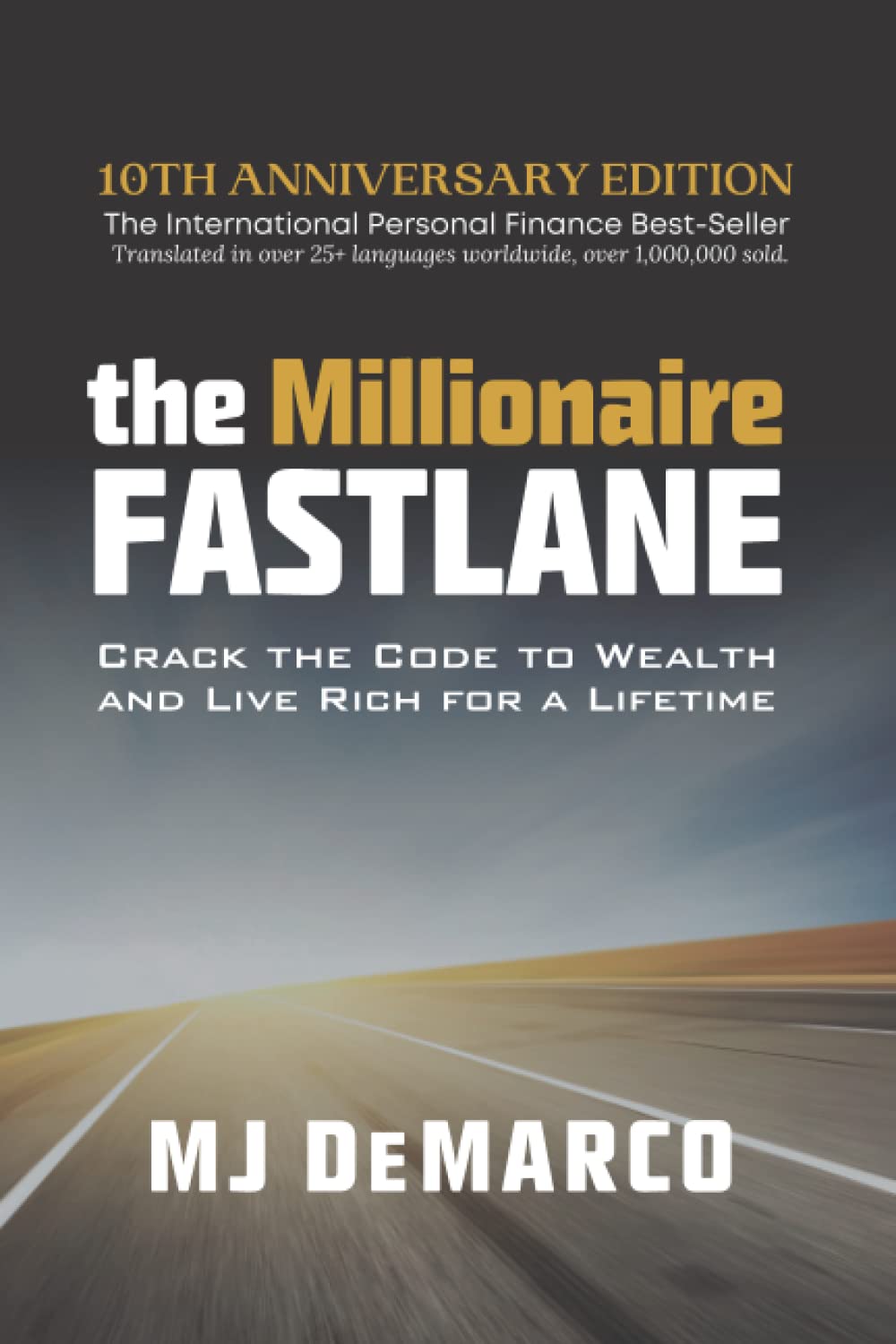
  • Get Rich Quick With Millionaire Fastlane

    Get Rich Quick With Millionaire Fastlane

    The author of “the Millionaire FASTLANE” MJ DeMarco sheds some light on how he got wealthy and how you can do the same. It sounds like a “get rich quick” scheme but I was surprised to find many timeless lessons about responsibility, market value and customer centricity.

    I got this book as a present and it turned out to be an interesting read on entrepreneurship and how to accommodate wealth over a couple of years instead of decades.

    Millionaires mindset

    In contrast to the past books I shared in the past, DeMarco postulates, that becoming a millionaire will not work out for the most of us via compounding and patience.

    Don’t just chase money; create value—wealth follows those who solve problems for others. #successhabits

    In his view there are three types of paths when it comes to money:

    • sidewalks: Is about poorness, both in time and money. Most people on the sidewalks life for the moment and don’t consider their impact on tomorrow. They life beyond their means.
    • slowlane: The slow lane is an employment. You basically exchange your time and skills for money to work for someone else. As employee you make someone else rich. There is limited growth potential because increases on wages are more or less linear. Also any day has just 24h, so nothing to scale on this side as well.
    • fastlane: The fast lane is a business system allowing exponential growth by definition. Not every business falls into the category of a fast lane. If you are a self-employed electrician you can’t scale your time same as with the slow lane. The important factor is the business system that allows you to generate wealth independent of your time. I see parallels to goals vs. systems post shared earlier.

    3 Timeless lessons learned from this book

    #1 – You are responsible for your life situation. This also includes your financials. If desire to be wealthy but you are not, you should consider changing your behaviour.

    “If you want to keep getting what you’re getting, keep doing what you’re doing” – DeMarco

    With this you don’t have to resign your employment. But first acknowledge the fact that you are in the driver seat of your life. Reflect on your spending habits as a starting point.

    #2 – Be aware of your behaviour as a consumer and experience the creator point-of-view. Because we are all targets to the marketing machinery exposed 24/7 on all channels. Even this blog is an example of me selling you my thought process and you paying with your time and attention. Your mindset about money will change, once you understand that for the most cases, someone is constantly trying to sell something to you. The best way to grasp what this means is becoming a creator, a maker or producer to others. It will sharpen your senses about multiple means around you to address you as a consumer.

    #3 – riding the fastlane is hard work as nothing comes for free. “Rich people got lucky” is something attributed to the wealthy. What most of us neglect is the fact that being wealthy is not an event. It is the aftereffect of a process by which you improving your probabilities to deliver yourself to true wealth. This is to identify a business need, deliver a scaling solution and improve it by talking to your customers until you found the right formula.

    The dark side of the Millionaire FASTLANE

    DeMarco states, that the risk profile of a fast lane strategy isn’t much different from the slow lane but the rewards are far greater. While I agree on the later, I don’t agree with the risk part. It is oversimplified and does not count the individual life situation. This unfortunately leads to the impression that entrepreneurship is glorified without point out enough on the actual risk that is part of the game.

    There is still a lot of opportunities out there to “collect money on the streets”, but still the majority of startups fail. And if you decide to follow that path, you have to accept failure culture as part of you daily life. “Fail early, fail often” they say.

    Summary and takeaways

    • Getting rich quick not only about self employment, but a business system that generates wealth independent of your time contribution.
    • The fast lane strategy is not for everyone, because it requires a high tolerance for coping with failure.
    • Think of habits that fuel your maker mindset to become a producer first and consumer second.

    My next read is “Expert Secrets” by Russel Brunson on how to make profit out of your knowledge.

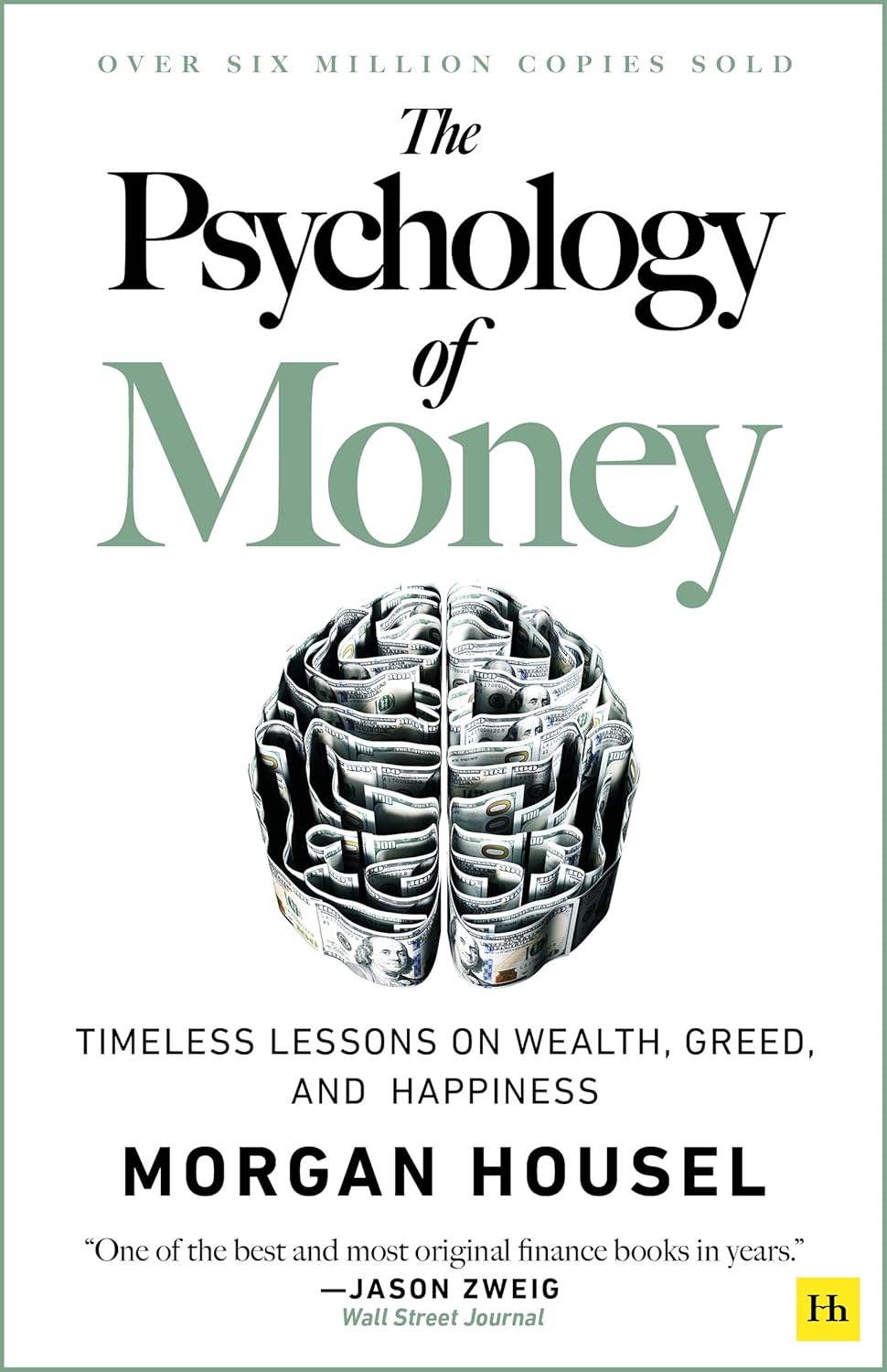
  • Interesting viewpoint on money and psychology

    Interesting viewpoint on money and psychology

    The Psycholog of Money by Morgan Housel grounded me on my current belief about money and investment. To some extend it was a relieve to learn that it is not about how smart you are but has a lot to do with how you behave. While on the other hand this seems to be the hard part when it comes to investing.

    I was always under the impression that I don’t know enough about how investing works in detail. Because I am not familiar enough with KPIs and what to keep an eye on etc. But what the author aims to teach us here is that the psychology of money is not a hard science. It is a soft skill first, where how you behave is more important than what you actually know about it.

    Emotions Guide Your Financial Actions

    I can relate to that since a lot of people are in the game of investing and who not aware of how much their emotions influence their behaviour. How I behave might make sense to me, because of my past experiences and conclusion I derive from, but I might look crazy to you. And this characteristic makes it hard to predict a system with a lot of emotional decisions using hard facts alone. And also explains, why simply asking a friend for an investment advice might not work out for you the same way as it does for your friend.

    The emotions are on both sides of the investment outcomes. There is FUD (fear, uncertainty and doubt) when your investment is in the red where you are tempted to sell to avoid further loss. Or FOMO (fear of missing out) when greed may guide you to invest in raising and trending assets like we have seen with crypto recently.

    About luck and risk

    There is sometime you get everything right, but still loose the game. These failure situation can be a lousy teacher, because it seduces us to think we made the wrong choices. Because the accidental impact of actions outside of your control have a bigger impact than the ones you consciously take. See also “happy money” by Ken Honda.

    The book made me acknowledge the role of luck in investment success but also the role of risk. And especially for the later to arrange my financial life in a way that the bad investments won’t wipe me out of the game, so I can keep playing until the odds fall in my favour.

    Gordon Gekko from Wolf of Wallstreet about greed

    I still recall this phrase from Wolf of Wall Street about greed and how it leads to exceptional results. Greed lets you take more risks and push your luck. This might be OK when you are young, because you have enough time left to learn and experiment. But keep in mind: once greed is fueled by envy, you will sabotage your sense of enough risk to loose it all and being pushed out of the game.

    The million dollar advise about money and investment

    The profound advice on money I understood from this book is taking calculated risks, being optimistic and patient.

    In order to make calculated risks, you have to have a plan about your investments. A plan with enough room for failures, because with most often likely not everything will be going according to plan.

    Being optimistic and having fate when investing into the future is true beyond the relevance for investment. If you don’t believe that the future is going to be better than today, even if your life situation dropped compared to yesterday, you will not have enough mental strength to stay committed.

    Last but not least it is about being patient with your investments. Over time, compound will do the heavy lifting of your financial gains. But this is nothing our brains understand naturally. We are more used to linear growth. Exponential growth like compound is therefore hard to grasp since also the results take some to materialise.

    And if there is a habit you’d want to think of when it comes to patience and investment, then to stop looking at your brokers app every minute. Set a notification instead and be aware of what your emotions are telling you when things don’t work out as planned.

    Conclusion

    • Focus more on broad patterns and less on specific individuals.
    • Keep calm and diversify your investment.
    • Be patent and establish an anti habit to stop checking your brokers app for the most current balance. Set a notification instead.

    Next on my reading list is “fast lane millionaire” by MJ DeMarco, who shares a different path to wealth.

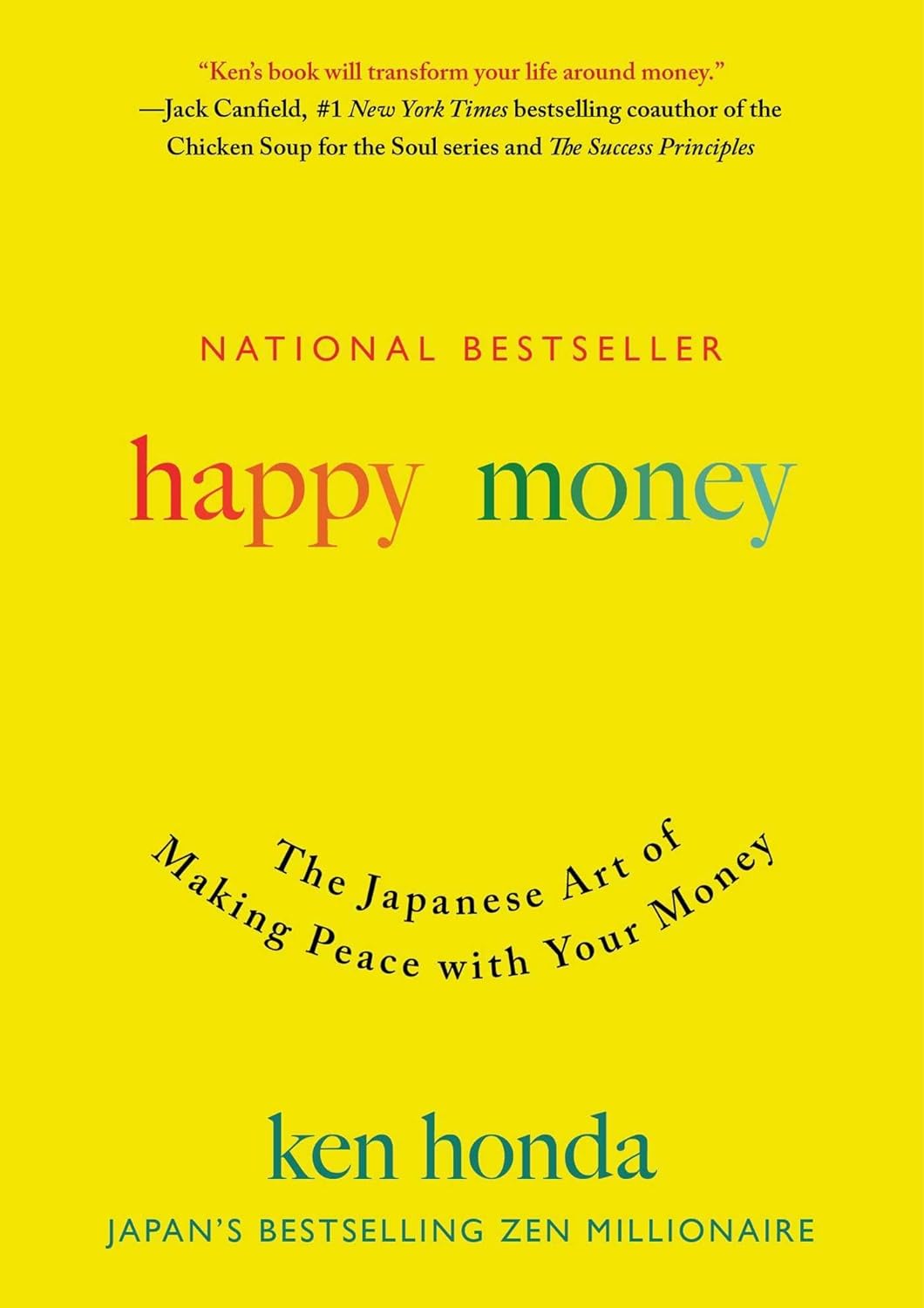
  • Challenge Your Relationship with “Happy Money” by Ken Honda

    Challenge Your Relationship with “Happy Money” by Ken Honda

    I chose this book to broaden my money and investing views beyond “buy and hold.”

    What I liked about the book is that it raised my awareness about the importance of how I earn and spent my money. While I already was cautious about what my spendings, I neglected the earning side.

    There is only scarcity of money, if you choose to believe it.

    As with life itself, it is the attitude we have towards financials that drives our beliefs. If we had bad experiences on how to pay our bills, we perceive money as a scarce resource – it needs to be protected. This may make us blind towards the fact that in today’s world there is more than enough. Federal Reserve is not printing it, but effectively adding funds to the money supply – we just have to somehow get on hold of it.

    Be appreciative for your financial income

    This brings me to the topic of earning money. For most of my life I believed that I did not deserve it. Be it my monthly salary, my earnings from all the side hustles I enjoy or gains and dividends from my investments on the stock and crypto market. I simply didn’t think much of getting paid for my time and skills.

    But this is something the author aims to educate us on. To observe whether the money you receive is based on an activity that you enjoy, and understand that you and your productivity are the money’s worth. If you are not happy with what you do to get paid for, then instead of suffering daily find something you enjoy or a reason to enjoy your daily work beyond the financial aspect. Maybe by reframing your purpose in what you do for living.

    Think of Norman Lawson who figured out 39 ways of not working lubricant formulas, but with WD40 found a rust preventive, penetrant and moisture displacer most of use already used.

    Say “arigato” to the money that leaves your wallet

    The author encourages us to apply the same mindful exercise while spending money. Also being thoughtful, about if the money spent is for something that really makes you happy on the long run. This implies, that you are aware of what makes you truly happy.

    Take for example a new shirt that you always wanted, think of the all the necessary steps that are required to produce it. Starting from someone who had an idea to design the shirt, compose the materials and colours, create the fabric, sew everything together, transport it to the shops or distributors and finally reaching you after you bought it.

    So when you say arigato (thank you in Japanese) while spending your money on that shirt, it is acknowledging that there are several people involved in producing this shirt and to be thankful for their work. But this is also acknowledging that you are also part of some value creation you deserve to get paid for.

    As addition to that book, I recommend the following TED talk, that wraps the topic up.

    What I derive from “Happy Money” by Ken Honda:

    • Get mindful about money and try the habit of saying arigato while spending and receiving it.
    • Occasionally, we overspend and lose money, but sometimes it’s due to changing financial rules, so avoid being too hard on yourself for the latter.
    • Before buying, consider if your happiness comes from spending or the product/service itself.

    Next book on my list is “the Psychology of Money” by Morgan Housel. Stay tuned.