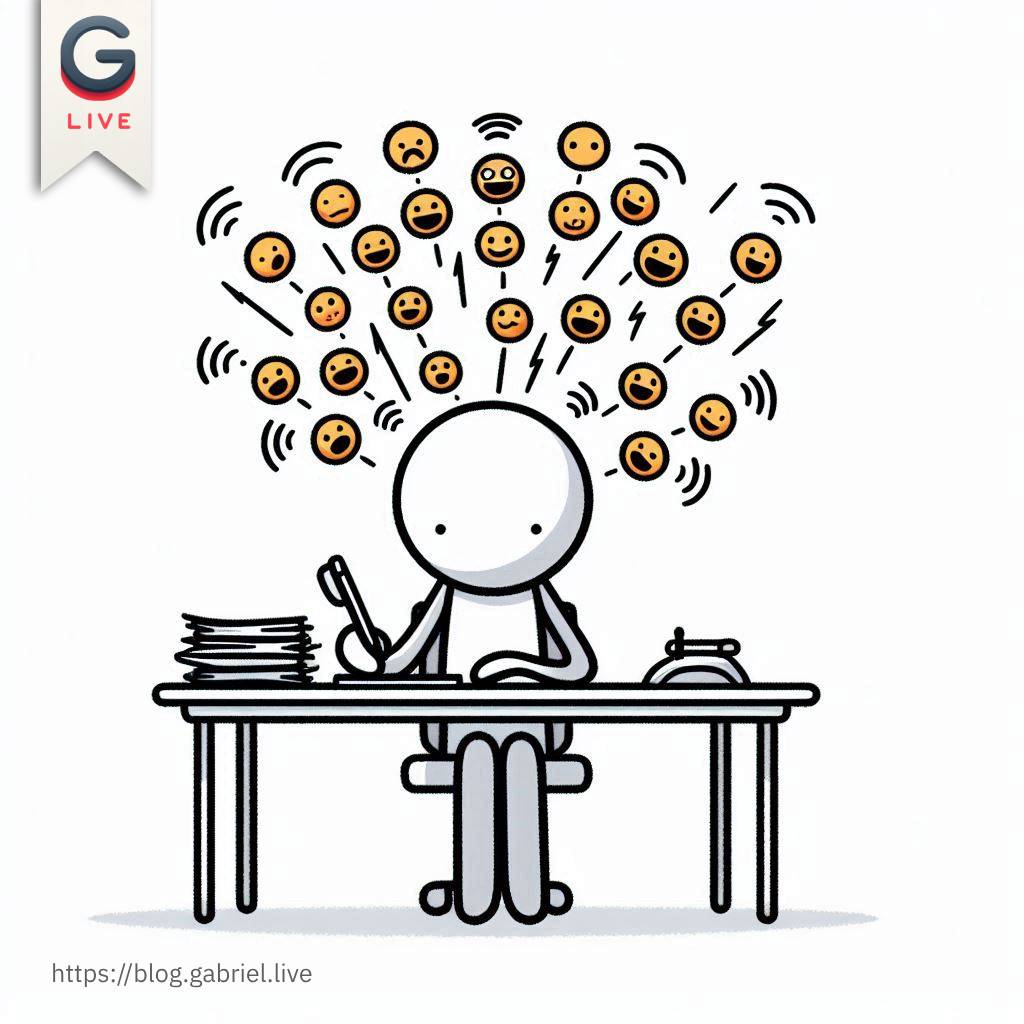
We all strive for focus, read productivity hacks, optimize our workspaces, and even try mindfulness techniques. But what if the biggest obstacle to your focus isn’t external distractions, but the internal world of feelings?
What you’ll find inside:
I recently spoke with a friend who confessed she struggles to contribute in meetings. She has valuable ideas, but is paralyzed by the fear of saying something “wrong”. She’s convinced it will sound foolish, or she’ll miss a crucial detail. My response wasn’t to tell her to just “push through it”. I explained that fear isn’t bad. It’s a primal signal – a caution flag waving to say, “Hey, assess the situation!”. It’s meant to make you cautious, not freeze you solid or make you flee the room.
This conversation sparked a deeper realization: we often treat feelings as enemies of productivity and deep work – something to suppress or ignore. But what if they’re actually vital signals, constantly communicating information we need to navigate life effectively? And what if learning to interpret those signals is the key to reclaiming our focus?
Feelings: The Body’s Language
Think about it this way: thoughts are the language of the mind, processing information and forming conclusions. Feelings are the language of the body, offering a visceral response to that information. Just as we can’t ignore important thoughts, we can’t afford to dismiss our feelings. Feeling something – joy, sadness, frustration, even discomfort – means your body or your unconscious is trying to tell you something.
Ignoring these signals in the name of productivity might seem effective in the short-term. You power through, ignoring the nagging anxiety or the quiet disappointment. But on the long run, this is like running a car with a flashing warning light. You might keep going for a while, but eventually, something will break down – burnout, chronic stress, a loss of motivation, or even physical illness.
However, and this is crucial, feelings also have a knack for derailing us. They can act like a radio signal getting lost in static, overwhelming our ability to concentrate on the task at hand. That’s because feelings are powerful, demanding attention, and often triggering impulsive reactions.
Four Horsemen of Negative Feelings & What They’re Trying to Tell You
Let’s examine my top of the most common culprits that steal our focus by playing on infinite loop in your head:
- Anxiety: Often experienced as a racing heart, shallow breathing, and a sense of dread.
What it communicates: “Something feels uncertain, a potential threat exists, prepare to respond!”
Positive aspect: Anxiety, when acknowledged, can fuel proactive problem-solving. It can make us more aware of potential risks and encourage us to take steps to mitigate them. - Anger: A powerful emotion characterized by frustration, irritation, and a desire for justice.
What it communicates: “A boundary has been crossed, a need is not being met, something is unfair!”
Positive aspect: Anger, when channeled constructively, can be a powerful motivator for change. It can drive us to stand up for ourselves and others, and to address injustice. - Insecurity & Self-Doubt: A nagging feeling of inadequacy, questioning your abilities and worth.
What it communicates: “You’re stretching beyond your comfort zone, you’re vulnerable, there’s a fear of failure.”
Positive aspect: Self-doubt, surprisingly, can lead to growth. It encourages us to seek feedback, to learn and improve, and to approach challenges with humility. Also remember that is always a journey into the unknown and insecurity is part of it. - Regret: A painful emotion stemming from past actions or inactions.
What it communicates: “You value something you didn’t prioritize, a lesson needs to be learned, a course correction is needed.”
Positive aspect: Regret, when processed, can be a powerful teacher. It helps us clarify our values, make better decisions in the future, and cultivate greater self-awareness. It indicates, that you now are aware of your past mistakes.
If you’d like to explore further on our emotions, I recommend to follow up on Lisa Feldman Barrett, who explains that emotions are not hardwired responses but are constructed by the brain based on past experiences and context.
Reclaiming Your Focus: Three Powerful Habits
So, how do you navigate this internal landscape of feelings without getting completely derailed? Here are three habits to cultivate:
- The “Boundary Setting” Exercise (Ongoing): Identify situations or people that consistently trigger negative emotions. Then, consciously set boundaries to protect your energy and well-being. This could involve saying “no” to extra commitments, limiting contact with toxic individuals, or clearly communicating your needs.
Why it works: Boundaries reduce the frequency of triggering situations, minimizing emotional overwhelm and restoring a sense of control. - The “Feeling-Focused Question” (When Distracted): When you notice your focus drifting, instead of berating yourself for being distracted, ask yourself, “What feeling is contributing to this distraction?” Is it anxiety about a deadline? Frustration with a task? Boredom? Once you identify the feeling, acknowledge it (“Okay, I’m feeling anxious right now.”) and briefly explore what’s triggering it. Why it works: This shifts you from reacting to the feeling to understanding it. Understanding creates space and allows you to choose a more conscious response.
- The “Micro-Action” (When Feeling Overwhelmed): Instead of trying to “fix” a feeling or immediately “power through” your work, take a small, actionable step. If you’re feeling anxious about a large project, break it down into the smallest possible task (e.g., “Write one paragraph.”). If you’re feeling frustrated, take a 5-minute break to stretch or listen to music.
Why it works: Micro-actions create a sense of momentum and control. They interrupt the cycle of overwhelm and allow you to gradually regain your focus.
Listen to the Signal
Feelings aren’t enemies to productivity; they are important signals. Just like any signal, the stronger the feeling, the more important it is to listen in. Ignoring them might offer temporary gains, but ultimately leads to burnout and disconnection.
By cultivating emotional awareness, learning to interpret those signals, and responding with compassion and action, you can reclaim your focus, navigate life’s challenges with greater resilience, and unlock your full potential. The static may never disappear entirely, but you can learn to tune it out – and listen to the messages beneath.
Leave a Reply